
Table of Contents
Understanding Crisis Intervention: A Faith-Based Framework for Emotional and Spiritual Support
Informed by the American Counseling Association’s ethical framework, crisis intervention is an immediate, short-term response to an emotional or spiritual emergency–distinct from ongoing therapy. So, what is crisis intervention? It’s compassionate support that blends biblical principles (like presence and prayer) with psychological best practices. This mental health crisis intervention approach reflects God’s love and Jesus’ example, calling our faith community to care for one another. Our framework is for spiritual and emotional support only and is not a substitute for professional treatment. While every crisis is unique, a crisis intervention model can guide our care. With this foundation, we can begin to recognize warning signs and respond with practical wisdom.
What Is Crisis Intervention and How Does Spiritual Care Fit In?
When you begin understanding crisis intervention, you’re really learning about the immediate, short-term support that helps a person regain stability and reconnect with their existing support network. At Path to a Better Life, we believe this moment of stabilization is also a sacred opportunity–a chance to ground yourself in faith, meaning, and community while you navigate overwhelming circumstances. Spiritual care in a crisis doesn’t replace professional mental health crisis support services; it complements them by offering prayer, a compassionate presence, and a bridge back to your faith community.
What Is Crisis Intervention?
A crisis intervention is an immediate, short-term response designed to restore stability when life feels unmanageable. Common crisis intervention techniques include active listening, grounding exercises, and connecting a person to essential resources. A personalized crisis intervention plan weaves these elements into a faith-sensitive safety net. It’s important to remember that spiritual care is complimentary–it walks alongside professional mental health treatment rather than replacing it.
Crisis Intervention Techniques: From Grounding to Prayer
Understanding crisis intervention involves blending evidence-based methods with faith-based practices to restore emotional balance. We combine professional counseling techniques with spiritual tools to help you navigate distressing moments.
Evidence-Based Crisis Intervention Techniques
Active listening means maintaining eye contact, nodding, and paraphrasing feelings without interrupting. Another proven crisis intervention technique is the 5-4-3-2-1 grounding exercise: name five things you see, four you can touch, three you hear, two you smell, and one you taste. The 4-7-8 breathing method–inhaling for four seconds, holding for seven, and exhaling for eight–also calms the nervous system effectively.
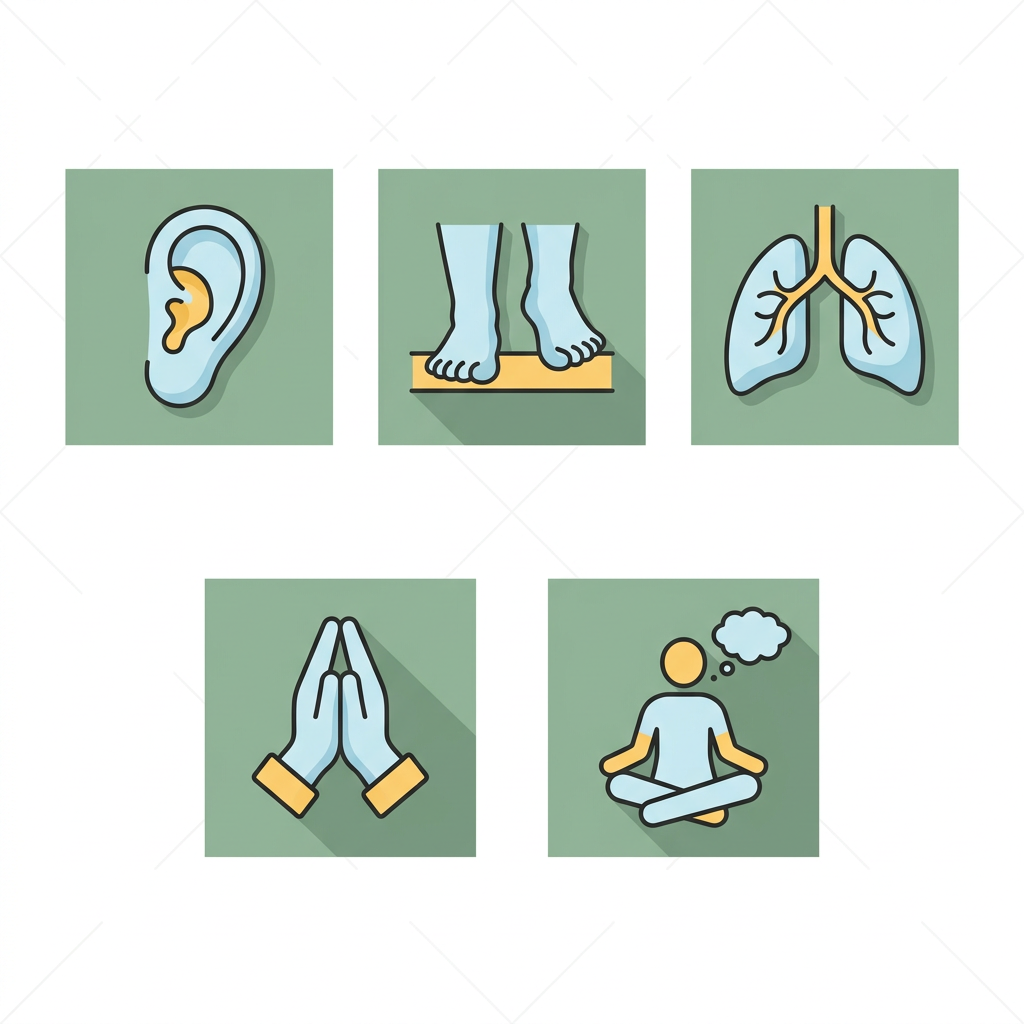
Visual icons for crisis intervention techniques
Faith-Based Techniques: Prayer, Meditation, and Connection
Prayer during a crisis can be a simple, repeated request like “Lord, grant me peace,” focusing on God’s presence rather than problem-solving. Another powerful crisis intervention technique is meditating on scripture, such as “Be still, and know that I am God,” which serves as faith-based grounding. These crisis intervention techniques offer spiritual and emotional support but are not a substitute for professional mental health treatment.
At Path to a Better Life, we encourage exploring these practices as part of your spiritual journey, knowing deeper habits like our One Minute Rule can provide ongoing stability.
The Crisis Intervention Model: How Faith Communities Adapt It
Understanding the Crisis Intervention Model: A Simple Framework
Understanding crisis intervention starts with the ABC crisis intervention model: Achieve contact, Boil down the problem, Cope. It provides structured crisis intervention techniques for mental health crisis intervention.
A Faith-Integrated Crisis Intervention Model
We add prayer, scripture, and spiritual companionship to the ABC steps. Isaiah 41:10 comforts. Our Traveling Companion continues support. This crisis intervention plan is for spiritual growth, not professional care. In crisis, call emergency services.
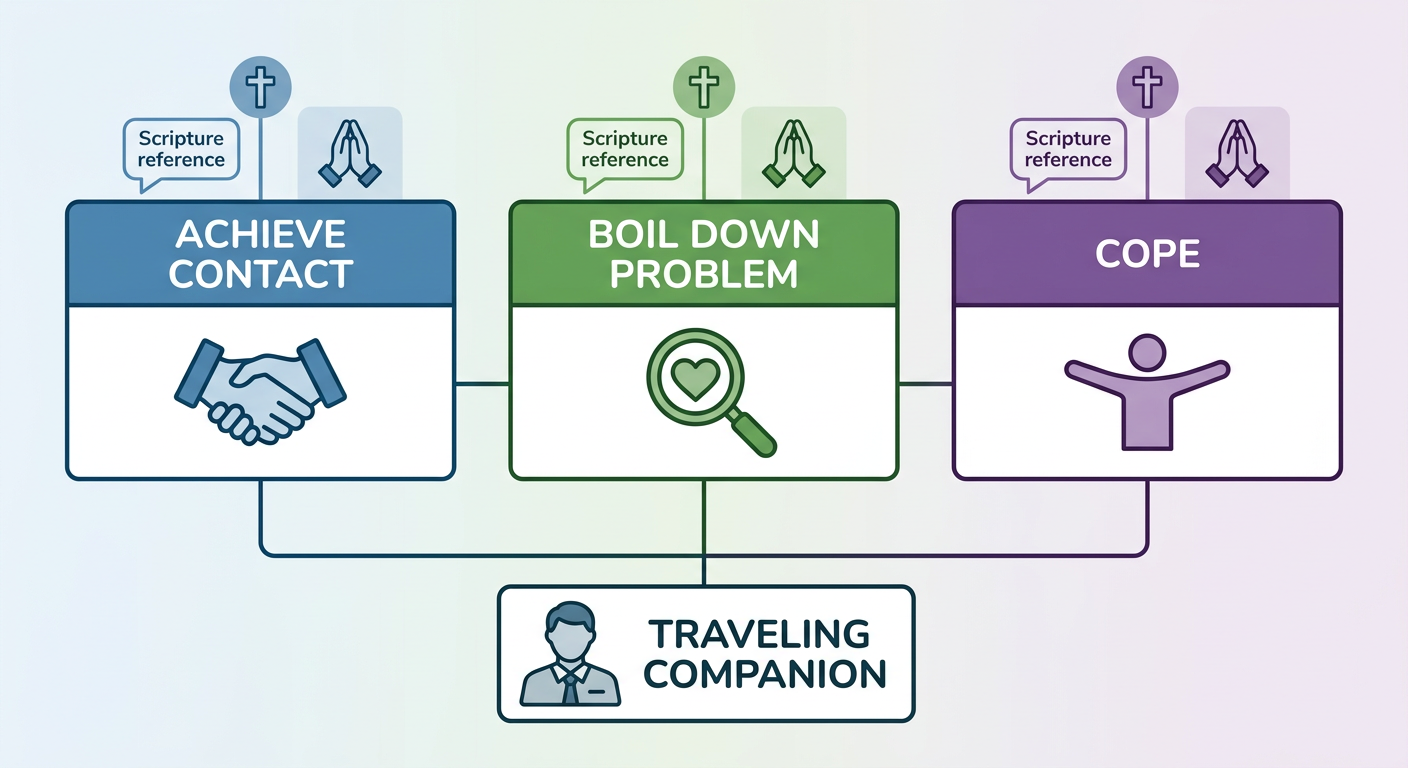
Faith-integrated crisis intervention model with three stages.
Build Your Own Crisis Intervention Plan: Practical and Spiritual Steps
Now that we have spent time understanding crisis intervention, we can move from knowledge to action. A personal plan is one of the most loving gifts we can give ourselves. It is a tool that helps us remember what to do when our minds feel cloudy and our emotions spike. At Path to a Better Life, we see this not as a clinical exercise but as a spiritual growth resource, a way to prepare our hearts and minds before a storm comes. We want to be clear that this support plan is not a replacement for professional mental health crisis support services. It is a spiritual companion, designed to remind you that you are not alone and that God is near.
Creating Your Personal Crisis Intervention Plan
The goal of mental health crisis intervention is to stabilize, but our goal here is also to draw close to God during hard moments. We encourage you to find a quiet space and write down your plan. The act of writing helps solidify your intentions. We recommend you build your own plan with these five key elements:
- Trigger Awareness: Identify what situations, thoughts, or memories tend to spark your crisis. Knowing your triggers gives you early control over your response.
- A Trusted Support Contact List: Write down names and numbers. For immediate, professional help, include a hotline like the Canada Suicide Prevention Service at 1-833-456-4566. Your crisis intervention plan should also list a close friend or family member.
- Grounding Techniques: This is where we integrate powerful crisis intervention techniques. When feelings overwhelm you, try the 5-4-3-2-1 method: acknowledge five things you see, four you can touch, three you hear, two you can smell, and one you can taste. Deep, slow breathing is equally vital.
- Spiritual Practices: This step sets your plan apart. Use your spiritual practices to call out to God. Try praying the Psalms out loud, using The One Minute Rule to simply pause and listen, or playing a song from our music library. We believe this intentional pause can help you Hear God speak to you today, really it’s that simple.
- A Step-by-Step Checklist: Create a small template for yourself. List: 1. My top three personal early warning signs. 2. The first person I will call. 3. The grounding exercise I will try first. 4. A short scripture or prayer I will speak.
Why Sharing Your Plan with a Spiritual Mentor Matters
We were never meant to walk The road less traveled all alone. A crisis can make us feel isolated, but sharing our crisis intervention plan with a spiritual mentor breaks that darkness. By sitting down with a pastor, a trusted friend, or a Traveling Companion, we invite accountability and wisdom. When they know our triggers and our chosen grounding techniques, they can gently guide us back to safety. This relationship is a core part of your Path to a Better Life. For example, a mentor who knows our plan can simply say, “Let’s try your breathing exercise now,” or “Let me read that Psalm to you.” This connection reduces the feeling of isolation and grounds us in the truth that someone else sees our struggle and still shows up.
This plan is for spiritual growth and is not a substitute for professional mental health treatment. In a crisis, call emergency services or a crisis hotline.
Your Path to Crisis Preparedness and Peace
We believe understanding crisis intervention is the first step to finding real peace. Preparation isn’t a burden–it’s a journey we walk together, grounded in hope and God’s Story.
This page helps you gain a clear, faith-centered view of crisis intervention. It’s about moving from fear to confidence, knowing you’ve built a foundation that steadies your heart when life feels uncertain.
True peace comes from being ready, not from avoiding storms. Our community stands beside you every step of the way, offering resources that light the path forward.
Let’s look at the steps you can take to be ready.