
Table of Contents
Understanding Human Trafficking in Texas
Human trafficking in Texas is a serious crisis that affects thousands of lives each year. Under Texas law, human trafficking involves forced labor or commercial sex. The state’s location along the Mexico border and its extensive highway system make it a known hub for trafficking networks. This combination of geography and transportation fuels the problem, placing Texas among the top states for trafficking cases.
According to the Texas Attorney General, the National Human Trafficking Hotline recorded over 1,000 cases in 2023. Recent human trafficking in Texas statistics reveal that child trafficking is a major concern–children are particularly vulnerable. This crisis demonstrates how Texas human trafficking devastates communities across the state, and addressing Texas child trafficking is essential to protect the most innocent.
Understanding these numbers is a first step. Organizations like Safe House Project work tirelessly to support survivors. For daily spiritual strength, we invite you to try our free daily devotional app. If you or someone you know is a victim, call the National Human Trafficking Hotline at 1-888-373-7888. In our next section, we’ll explore warning signs and practical ways to help.
Prevalence and Statistics of Human Trafficking in Texas
To understand the scope of this crisis in Texas, we turn to official data from the Texas Attorney General. The Texas Attorney General’s Office tracks and reports human trafficking cases across the state, providing the most authoritative statistics on the issue. We present key findings from their latest reports to illustrate the prevalence of human trafficking in Texas.
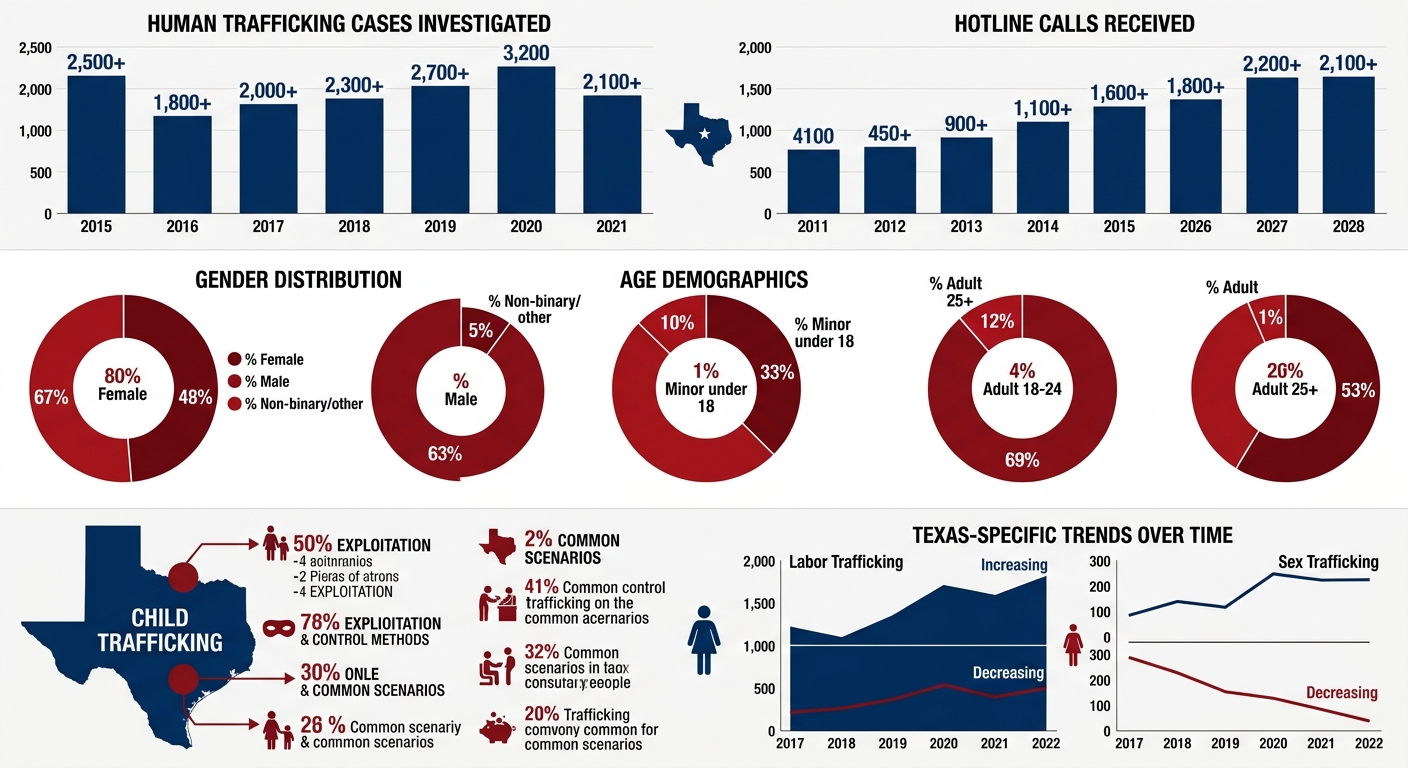
Texas human trafficking statistics overview.
How common is human trafficking in Texas?
Human trafficking in Texas is a significant concern, and Texas human trafficking numbers reflect a growing crisis. The Attorney General’s office receives numerous reports each year, and hotline data indicates Texas is consistently among the top states for call volume. Law enforcement agencies across the state actively investigate trafficking cases, and reported incidents have been on an upward trend. While exact numbers fluctuate, the Texas Attorney General’s data confirms trafficking is a widespread issue throughout the state.
What do current statistics reveal about human trafficking in Texas?
Current human trafficking in Texas statistics highlight key demographic and geographic trends. According to the Texas Attorney General’s Office, victims are predominantly female and minors are a significant proportion. U.S. citizens make up the largest group, though non-citizens are also vulnerable. Major trafficking hubs include Houston, Dallas-Fort Worth, San Antonio, and Austin. Common recruitment methods involve coercion, false job offers, and online grooming. Annual data from the Attorney General shows a steady rise in trafficking reports.
How many minors are estimated to be victims of sex trafficking in Texas?
Texas child trafficking is especially alarming. The Texas Attorney General’s Office reports that minors make up a substantial proportion of trafficking victims, with thousands at risk each year. Exact counts are difficult because many cases are unreported. Children are targeted through social media, runaway situations, and family exploitation. Despite efforts, the number of identified victims remains concerning. These statistics emphasize the need for continued vigilance.
With these numbers in mind, we can explore the underlying factors driving trafficking in Texas. If you or someone you know is affected by trafficking and seeking spiritual support, our free scripture reading guides 2026 offer a path to hope and healing.
Identifying and Reporting Human Trafficking in Texas
Human trafficking in Texas is a serious issue, but recognizing the signs and knowing how to report can save lives. Below, we answer the most common questions about identifying and reporting this crime.
How can I report suspected human trafficking in Texas?
If you suspect trafficking, call the National Human Trafficking Hotline at 1-888-373-7888 or submit a tip through the Texas Attorney General’s online reporting form. According to the Texas Attorney General’s office, these reporting methods are critical for addressing Texas human trafficking. For immediate danger, also contact your local law enforcement. Acting quickly can disrupt trafficking networks and protect victims.
What are the signs that someone might be a victim of human trafficking?
Common warning signs include: Physical signs–malnourishment, bruises, or signs of abuse. Behavioral signs–a person who seems fearful, submissive, or unable to speak freely, or who lacks control over personal documents. Environmental indicators–living at their workplace, restricted movement, or unusually high security. If you notice these patterns, consider reporting. Trafficking can happen anywhere, and early recognition is key.
How are traffickers targeting children in Texas via social media?
Traffickers often use Instagram, Snapchat, and gaming apps to groom minors. They may pose as friends, build trust, and manipulate children into sharing personal information or meeting in person. Although human trafficking in Texas statistics are difficult to compile precisely, experts note that online recruitment has become a common tactic. Parents can help by monitoring online activity, having open conversations about safety, and using privacy settings. Texas child trafficking cases consistently show digital luring, so staying alert is essential.
We encourage you to act if you see these signs–reporting could rescue someone. Survivors often need spiritual and emotional support; at Path to a Better Life, we connect people to resources like Christian mental health support for recovery. Please remember, this is not a substitute for professional mental health treatment. If you or someone you know needs clinical care, consult a qualified provider. Together, we can fight human trafficking in Texas.
Legal Protections and Community Prevention Efforts
When it comes to human trafficking in Texas, both legal protections and community action play vital roles in safeguarding children and empowering residents. In addition to understanding the scope of the problem, it is important to know the legal safeguards in place for victims.
What legal protections exist for children who are victims of trafficking in Texas?
Texas law provides several critical protections for child victims. According to the Texas Attorney General, the state’s Safe Harbor laws decriminalize minors involved in prostitution and grant immunity from prosecution for trafficking victims. Young survivors can also pursue expungement to remove criminal records obtained as a direct result of being trafficked. Additionally, mandatory reporting requirements obligate professionals such as teachers, healthcare workers, and law enforcement to report suspected cases of Texas child trafficking. These measures help ensure that victims receive support rather than punishment.
How can communities in Texas help prevent human trafficking?
Community-based prevention efforts are equally essential. The Safe House Project outlines effective strategies, including awareness training for hospitality and hotel staff, age-appropriate school-based education programs that teach students to recognize warning signs, and neighborhood watch initiatives that encourage residents to report suspicious activity. While human trafficking in Texas statistics are challenging to capture, national data shows that community reporting and coordinated responses with local law enforcement help identify and protect victims. Faith communities can also play a supportive role; connecting with a spiritual mentor can provide guidance for survivors seeking faith-based encouragement on their path to a better life. Together, these initiatives create a network of watchfulness that deters traffickers and supports at-risk youth.
This information is for educational purposes only and is not a substitute for professional medical or mental health advice. Please see our Privacy Policy and Terms of Use for more details.
Primary Routes and High-Risk Areas in Texas
When we discuss human trafficking in Texas, three major highways stand out as critical corridors exploited by traffickers. These interstates connect the border, ports, and cities, making them prime routes.
What are the main routes traffickers use in Texas?
According to the Texas Department of Transportation (TxDOT), I-35, stretching from Laredo to the Oklahoma border, is the most heavily used route due to its direct connection from the southern border to inland metropolitan areas like Austin and Dallas-Fort Worth. I-45 links Houston’s port and airports to Dallas, while I-10 runs from El Paso near the western border to Houston, forming a trans-state corridor. These highways, documented by TxDOT, carry immense traffic volumes that traffickers exploit, and the convergence of these major arteries enables rapid movement of victims across the state.
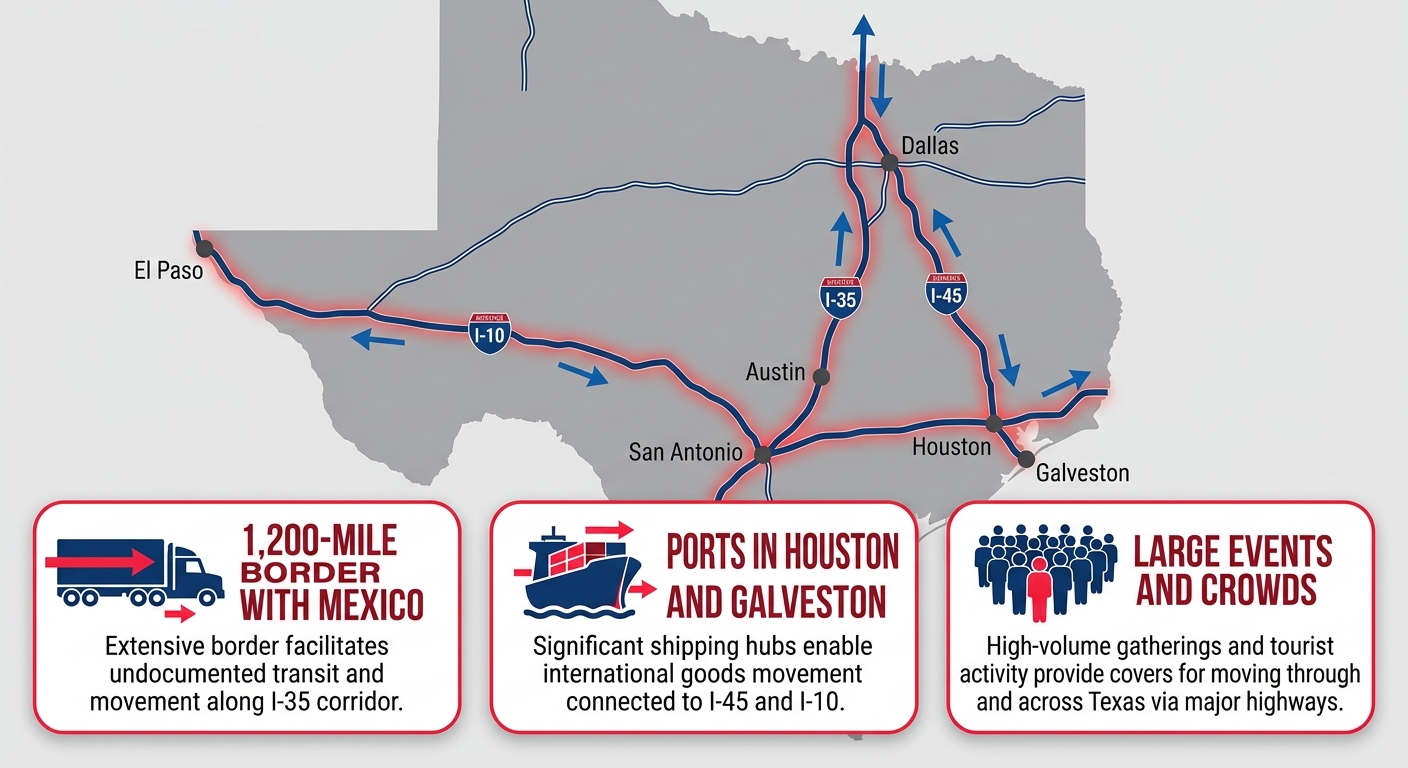
Texas highway trafficking corridor infographic with risk factors
Why is Texas considered a high-risk state for human trafficking?
The scale of human trafficking in Texas is driven by several geographic and demographic factors. Texas shares a 1,200-mile border with Mexico, a primary entry point for transnational trafficking. Major international ports in Houston and Galveston, along with large events attracting transient populations, further elevate risk. Human trafficking in texas statistics indicate the state ranks second nationwide in hotline calls, underscoring the crisis. These realities make texas human trafficking a persistent challenge. Anyone affected can reach out to a 24 7 christian prayer hotline for immediate emotional and spiritual support. We also know that minors are particularly vulnerable, so awareness of texas child trafficking warning signs is crucial.
Support and Resources for Trafficking Survivors
While the statistics around human trafficking in Texas are sobering, many organizations stand ready to help. Support systems offer free and confidential assistance, from immediate crisis intervention to long-term recovery pathways. Many survivors of human trafficking in Texas, including victims of child trafficking, rely on these networks to rebuild their lives.
Where can victims of human trafficking in Texas find support and resources?
Immediate help is available. If you or someone you know is in immediate danger, call 911. The following resources are free and confidential:
- National Human Trafficking Hotline: 888-373-7888 — 24/7 support that connects callers to local services.
- Texas coalitions coordinate shelter placements, legal aid, and counseling referrals across the state.
- Safe House Project, a national nonprofit, provides emergency shelter and survivor-centered care through a nationwide network of safe houses.
These organizations help victims of human trafficking in Texas find safety and begin the process of healing.
What role do faith-based organizations play in helping trafficking survivors in Texas?
In the fight against human trafficking in Texas, faith communities fill critical gaps in long-term recovery. Local churches and ministries offer crisis intervention, prayer support, and mentorship programs. At Path to a Better Life, we supplement these efforts with a prayer library, transformation stories, and a crisis resource directory — all designed to complement professional care, not replace it. Our urgent-help coordination service connects individuals to immediate pastoral support and community resources. For survivors seeking gentle spiritual practices, we offer resources such as christian meditation for beginners that may bring comfort.
When addressing Texas human trafficking, every survivor deserves to know they are not alone. We invite you to explore our crisis resources and remember that help is available.
Disclaimer: The resources listed are for informational purposes only and are not a substitute for professional medical or mental health advice. Always consult a qualified professional for personalized care.
Still Have Questions About Human Trafficking in Texas?
You might still have questions about human trafficking in Texas. For reporting and official statewide efforts on Texas human trafficking, the Texas Attorney General offers guidance. The Safe House Project helps survivors of Texas child trafficking and exploitation, and the Texas Department of Transportation runs awareness campaigns. These tools can help you take action. If you want to get involved, start with these trusted organizations. We encourage you to reach out, learn more, and share what you find. Not a substitute for professional advice. To build resilience in your own life, visit pathtoabetterlife.org and discover our free 21-Day Transformation Program.