
Table of Contents
Understanding Crisis Intervention as a Spiritual Support Pathway
Understanding crisis intervention as a spiritual support pathway begins with the question, what is crisis intervention? It is short-term help for someone in overwhelming distress. At Path to a Better Life, we view spiritual care–prayer, Scripture, faith community–as a complementary crisis intervention model. We do not provide professional mental health crisis intervention, but a personal crisis intervention plan grounded in faith can be a meaningful first step.
According to the National Institutes of Health, effective crisis intervention models aim to stabilize symptoms. The AIHCP certifies crisis intervention techniques for professionals. At Path to a Better Life, our prayer library and transformation stories offer spiritual crisis support, not clinical care. Many people find Christian mental health support through church communities for immediate encouragement. We also guide you toward mental health crisis support services when deeper help is needed. (Disclaimer: This information is not a substitute for professional medical or mental health advice. Consult a qualified professional for your situation.)
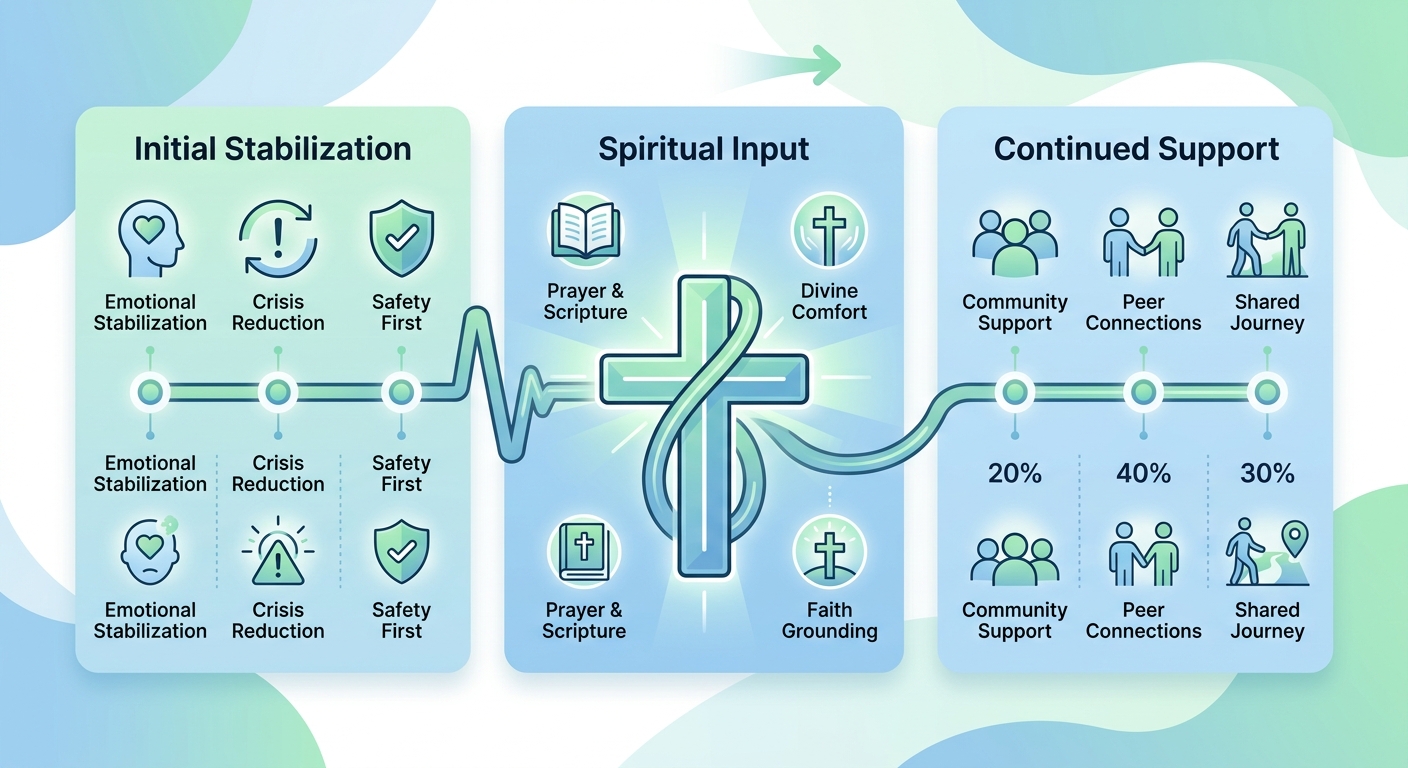
Three pillars of spiritual crisis support: faith, prayer, and community.
Financial Accessibility of Faith-Based Crisis Support
Beyond the types of support available, one common concern is cost. We believe financial barriers should never prevent someone from receiving crisis care. Many ask what is crisis intervention, and understanding crisis intervention proves that quality support during a mental health crisis intervention does not require expensive fees. Path to a Better Life embraces this principle by offering free faith-based crisis support to individuals facing emotional distress.
We adapt a proven crisis intervention model that combines emotional stabilization with spiritual care. According to crisis intervention curricula from academic sources such as American InterContinental University (AIU), crisis intervention uses structured techniques to restore safety. Understanding crisis intervention as a short-term process that helps people regain equilibrium after trauma shows it is central to mental health crisis intervention. When we integrate these methods with prayer and scripture, we create a crisis intervention plan that addresses both mind and spirit. The crisis intervention techniques we use–active listening, presence-based support, and guided scripture reading–ensure individuals feel supported and connected to their faith.
We eliminate financial barriers because cost should never block access to compassionate care. As part of our commitment to accessibility, we offer free scripture reading guides that blend scripture reflection with crisis intervention techniques. These guides, together with our prayer library and other faith-based resources, provide mental health crisis support services at no charge. Our free 21-day transformation program, designed to help individuals discover a better life in just 21 days, offers a structured path to daily spiritual habits that reinforce resilience. Path to a Better Life is a crowd-funded organization, and the generosity of our allies sustains these free offerings, ensuring that faith-integrated crisis support remains available to all.
This financial accessibility flows from our crowd-funded model and the many free tools we provide at our Toronto-based organization. We invite you to explore our resources and Start Your Journey toward emotional and spiritual well-being. This content is not a substitute for professional medical or mental health advice; consult a qualified professional where appropriate.
The Process of Reaching Out for Crisis Support
The previous section outlined the definition and importance of crisis support, and understanding crisis intervention is a vital first step in reaching out when you feel overwhelmed. Taking that step requires courage–it is an act of self-compassion that opens the door to healing. Crisis intervention and crisis support exist precisely for moments like these, when you need someone to walk alongside you through uncertainty.
When you reach out to a crisis helpline, you will speak with a trained responder who listens without judgment. The call typically begins with establishing rapport, then moves into a brief assessment of your safety and immediate needs. Responders use proven crisis intervention techniques–such as active listening, validation, and safety planning–to help de-escalate emotional distress. Our crisis resources are available 24/7 and are completely confidential, so you can speak openly about whatever you are facing.
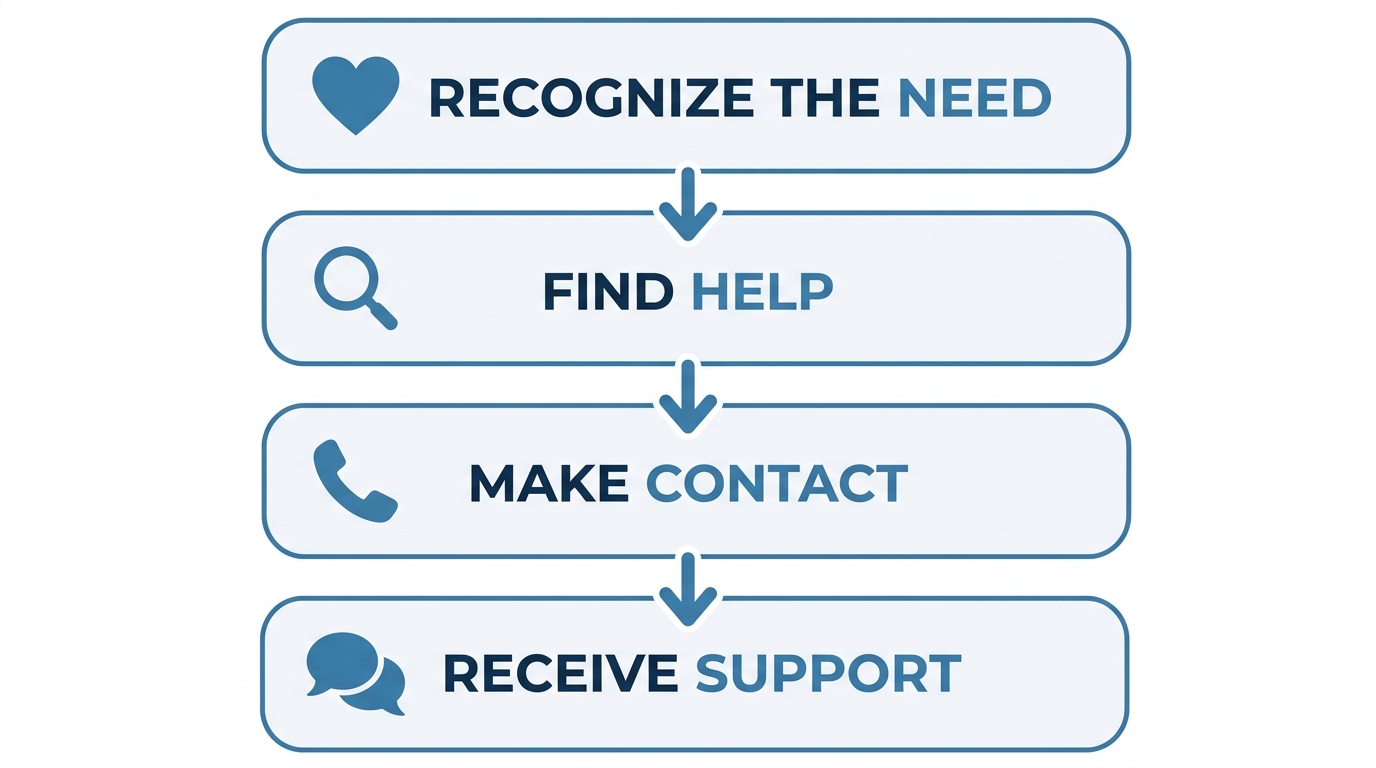
Crisis support outreach process at Path to a Better Life.
You do not need to have a detailed story or a plan before calling–the responder will guide the conversation with compassion. Together you can develop a simple crisis intervention plan that focuses on immediate safety and next steps. For those in the midst of a mental health crisis intervention, this initial connection can reduce feelings of isolation and provide a clear path forward. It is important to remember that crisis support is not a substitute for professional mental health treatment, but it is a powerful first step toward stability.
Our mental health crisis support services serve as a bridge to the ongoing guidance you may need. After the immediate crisis stabilizes, you may find comfort in connecting with a spiritual mentor who can offer faith-anchored encouragement. This information is not a substitute for professional medical or mental health advice; please consult a qualified professional for your specific needs. At Path to a Better Life, we are here to support you–no matter where you are on your journey.
Eligibility and Requirements for Faith-Based Crisis Services
Faith-based crisis services at Path to a Better Life are open to anyone seeking spiritual support during a difficult time, regardless of religious background or affiliation. Understanding crisis intervention as a faith-centered approach helps set realistic expectations, and no cost is required to access our core resources.
Our team provides a range of immediate spiritual supports, including:
- Urgent help page for on-demand prayer and guidance
- Prayer library with scripture-based prompts and a free daily devotional app
- Addiction recovery resource directory
- Depression and domestic violence support resources
These crisis intervention techniques are designed as complementary, not a replacement for professional mental health treatment. They offer immediate crisis intervention that is freely accessible. If you are wondering what is crisis intervention in this context, it is a crisis intervention model that emphasizes immediate comfort and long-term habit formation, distinct from mental health crisis intervention, which requires licensed clinical care.
To participate in longer-term features like the 21-day program or personalized prayer support, you may need to create a free membership account. Because Path to a Better Life is a crowd-funded organization, availability is supported by donor generosity, but all listed resources remain freely accessible. We encourage everyone to build a crisis intervention plan using our prayer library and daily reflections, and we also connect individuals to mental health crisis support services when professional help is needed.
If you are experiencing a medical emergency, please call 911 or your local emergency number.
In the next section, we’ll walk you through how to set up your free account and begin using these faith-based resources.
Timeframes for Receiving Crisis Support
When a crisis hits, understanding crisis intervention timeframes helps you know what kind of crisis support to expect. Most crisis hotlines aim to answer calls within a few minutes, though response time can vary depending on call volume and the time of day. Text and chat support may involve slightly longer wait times, but trained responders still make every effort to connect quickly.
In our organization, crisis resource referrals are typically provided within 24 hours of a request. Because these are not immediate mental health crisis support, we encourage reaching out to a hotline if you need to talk with someone right now. Having a crisis intervention plan in place can help you feel more grounded while you wait.
During high-demand periods — such as holidays — delays may still occur, but our resources remain available. Understanding crisis intervention also means recognizing that crisis support services are not a substitute for professional mental health treatment. If you are in immediate danger, please call 911 or go to the nearest emergency room.
Beyond immediate help, we invite you to explore resources that support ongoing well-being. For those seeking spiritual grounding rather than crisis intervention, our guide on Christian meditation for beginners offers a gentle way to build daily habits of reflection.
Ongoing Care and Follow-Up After a Crisis
Understanding crisis intervention is the first step–now that you know what crisis intervention is, you’re ready for the deeper work of sustained healing. Recovery is not a single event but an ongoing journey that unfolds over time.
We encourage you to establish a daily rhythm of prayer, music, or reflective reading using our Prayer and Music libraries. These free, crowd-funded resources are available anytime and can become sacred touchstones that anchor your day and gently reconnect you with hope and peace.
Our 21-day transformation program offers a structured, step-by-step path toward renewed stability and purpose. Through short daily reflections and practices, you’ll begin to build habits that support long-term emotional and spiritual well-being–all at no cost, thanks to our generous community of allies.
We also invite you to join the Path to a Better Life member community, where ongoing encouragement and accountability sustain your progress. Members share their journeys and pray together, offering practical support. Consider creating a personal wellness or safety plan that names your early warning signs and identifies whom to contact–whether our 24/7 prayer hotline or a trusted mentor–before a crisis re-emerges.
The crisis intervention that stabilized you was just the first step; daily rhythms and community support are what carry you forward long-term.
This information is not a substitute for professional medical or mental health advice. Consult a qualified professional for personal concerns.
Building a sustainable rhythm after a crisis takes intention, but you don’t have to walk this road alone. In the next section, we’ll hear transformation stories that show how ongoing care can shift a life from survival to flourishing.
Still Have Questions? Reach Out for Personalized Guidance
Have questions about understanding crisis intervention and crisis intervention techniques? We’re here to listen. Our team can help you choose a spiritual reading plan for busy schedule that fits your life. We can explain what is crisis intervention, the crisis intervention model, mental health crisis intervention, and create a crisis intervention plan. We’ll connect you with mental health crisis support services and offer guidance on crisis intervention. We’re a crowd-funded non-profit, not a substitute for professional mental health advice. Reach out to start your journey.