Table of Contents
- Spiritual Practice for Mental Health: A Faith-Centered Path to Resilience
- Understanding the Connection Between Spiritual Practice and Mental Health
- How Daily Spiritual Habits Rewire the Brain for Emotional Regulation
- Starting Your Spiritual Routine: Scripture Meditation and Christian Mindfulness
- Deepening Your Practice: Advanced Spiritual Disciplines for Long-Term Mental Well-Being
- Common Questions About Spiritual Practice for Mental Health
- Your Journey Toward Resilience Through Faith-Based Habits
Spiritual Practice for Mental Health: A Faith-Centered Path to Resilience
Beyond general wellness, spiritual practices offer a powerful path to strengthen your mental health. Let’s explore how. Spiritual practice for mental health is a faith-centered approach to building resilience through prayer, scripture meditation, and Christian mindfulness. At Path to a Better Life, we encourage these habits as part of a balanced wellness journey.
Scripture meditation invites you to reflect on Bible verses like Jeremiah 29:11: “For I know the plans I have for you… plans to give you hope and a future.” Meditating on God’s promises brings comfort and renewed perspective. Christian mindfulness, by contrast, focuses on present-moment awareness of God’s presence—pausing to notice His peace and guidance throughout your day. Participants in our 21-day transformation program have reported reduced stress and increased hope as they built these spiritual disciplines. Many find that regularly engaging spiritual practice for mental health helps replace anxious thoughts with scripture-based truth and a deeper sense of God’s closeness. These practices complement professional care—they are not a replacement for therapy or medical treatment.
We invite you to explore our Prayer Library or start your 21-day transformation program, which we will introduce next. While spiritual practice supports mental health, it works best alongside a trusted mental health nonprofit like Mental Health America. Path to a Better Life is not a substitute for professional medical or mental health advice; consult a qualified professional where appropriate.
Understanding the Connection Between Spiritual Practice and Mental Health
When we talk about spiritual practice for mental health, we’re exploring how daily habits of faith—like prayer, meditation, and reflective reading—can steady the mind and foster emotional resilience. At Path to a Better Life, we witness how these practices, woven into a 21-day journey, create space for renewal. This connection is not a replacement for therapy, but a complementary source of strength that many have found transformative. It’s about building a foundation of peace that supports your overall well-being.
Research further shows that this spiritual practice for mental health is rooted in measurable outcomes. According to a study from Azusa Pacific University, individuals who engage in regular prayer, scripture meditation, and contemplative prayer report notably lower symptoms of anxiety and depression. These findings highlight that faith-centered mindfulness isn’t just a feeling—it has tangible mental health benefits. The university’s research underscores that consistent spiritual disciplines can rewire thought patterns and promote emotional stability. Such evidence gives us confidence that the habits we encourage—like daily reflection and prayer—are more than rituals; they are pathways to a healthier mind.
In addition to academic findings, communities play a vital role in supporting mental health through faith. Many churches are uniquely positioned to offer safe spaces for honest conversation, prayer support, and resource referrals. For congregations looking to strengthen their role, Path to a Better Life offers specific guidance on church mental health support. Our resources also help you connect with a spiritual mentor—someone who walks alongside you, providing accountability and encouragement as you integrate faith with mental wellness. A mentor helps you see your struggles in the light of scripture, pointing you toward hope and practical next steps. Through our 21-day program, you can find a trusted mentor who guides you in daily spiritual habits, reminding you that you’re not alone on this journey.
Practical examples include scripture meditation and Christian mindfulness—practices that invite you to dwell on biblical truths and rest in God’s presence. These faith-centered mindfulness techniques can lower stress and foster resilience. However, it’s essential to remember that spiritual practices are not a substitute for professional mental health treatment. If you’re struggling with severe anxiety or depression, please seek help from a licensed therapist. Our tools are here to complement, not replace, clinical care. Results vary, and individual experiences differ. Understanding this connection is the first step—our 21-day program helps you integrate these practices daily.
How Daily Spiritual Habits Rewire the Brain for Emotional Regulation
Daily spiritual practice for mental health is not a comfort—it actually changes your brain. When we commit to habits like prayer and scripture meditation, neuroplasticity works to reshape our emotional responses.
The Neuroscience of Spiritual Practice: How Prayer and Meditation Affect the Brain
According to Mental Health America, spiritual practices like prayer and meditation can reduce anxiety and improve emotional regulation. Neuroscience explains why: consistent prayer decreases amygdala reactivity, helping us respond to stress more calmly, while strengthening the prefrontal cortex—the part of the brain responsible for thoughtful decision-making and emotional control. The Apostle Paul’s call to be “transformed by the renewing of your mind” (Romans 12:2) mirrors this process: as we focus on God, we literally reshape our neural patterns. Research also suggests that prayer can lower stress hormones like cortisol, deepening emotional stability. The neuroplasticity of prayer means that over time, our brains become less reactive and more capable of peaceful, intentional responses. Emotional regulation through spirituality becomes a natural outcome of daily practice, not just wishful thinking.
Scripture Meditation vs. Christian Mindfulness: Distinct Approaches to Emotional Balance
Scripture meditation anchors the mind by reflecting on specific Bible verses, replacing anxious thoughts with God’s truth. Christian mindfulness cultivates present-moment awareness of God’s presence, helping us notice emotions without judgment and release worry. Both approaches build emotional resilience, but they engage the brain differently. The following table compares their focuses, mental health benefits, biblical roots, and practice times.
| Dimension | Scripture Meditation | Christian Mindfulness | Prayer |
|---|---|---|---|
| Primary Focus | Reflecting on specific Bible verses | Present-moment awareness with God | Conversation with God (petition, confession, thanksgiving) |
| Mental Health Benefit | Reduces anxiety by replacing negative thoughts with truth | Improves emotional regulation through non-judgmental awareness | Lowers stress hormone levels through surrender and trust |
| Biblical Foundation | Psalm 119:15, Joshua 1:8 | Philippians 4:6-7 (anxiety replacement) | 1 Thessalonians 5:16-18, Psalm 34:17 |
| Time Commitment for Effect | 5-15 minutes daily for noticeable change | 10-20 minutes daily for emotional regulation | Several minutes spread throughout the day |
As the table shows, scripture meditation counters negative thoughts by embedding God’s Word, while Christian mindfulness reduces reactivity through awareness. Both align with the call to take every thought captive. For those wanting to integrate professional support, exploring faith based mental health counseling can provide help. Data from Mental Health America and Wellspring Miami.
The Role of Consistency: Building Neural Pathways Through Daily Spiritual Habits
Consistent practice transforms occasional spiritual exercises into lasting brain change. Neuroplasticity depends on repetition: every time we pray, read a devotional, or journal, we strengthen the neural circuits that regulate emotion. Much like physical training, these habits compound—a few minutes daily can shift our brain’s default responses from anxiety to peace. Over weeks and months, the calm becomes more automatic, and emotional triggers lose their power. This isn’t just a metaphor—each session physically reshapes brain wiring, making calm your go-to response.
At Path to a Better Life, we’ve designed a free 21-day transformation program that guides you through scripture-based reflections and prayer exercises to embed these habits. Discover a better life in just 21 days—it starts with one intentional moment each morning. Start Your Journey today; as you repeat these practices, you’re not just reading or praying, you’re rewiring your brain for lasting resilience. The 21-day journey is just the beginning; as you continue, these pathways grow stronger.
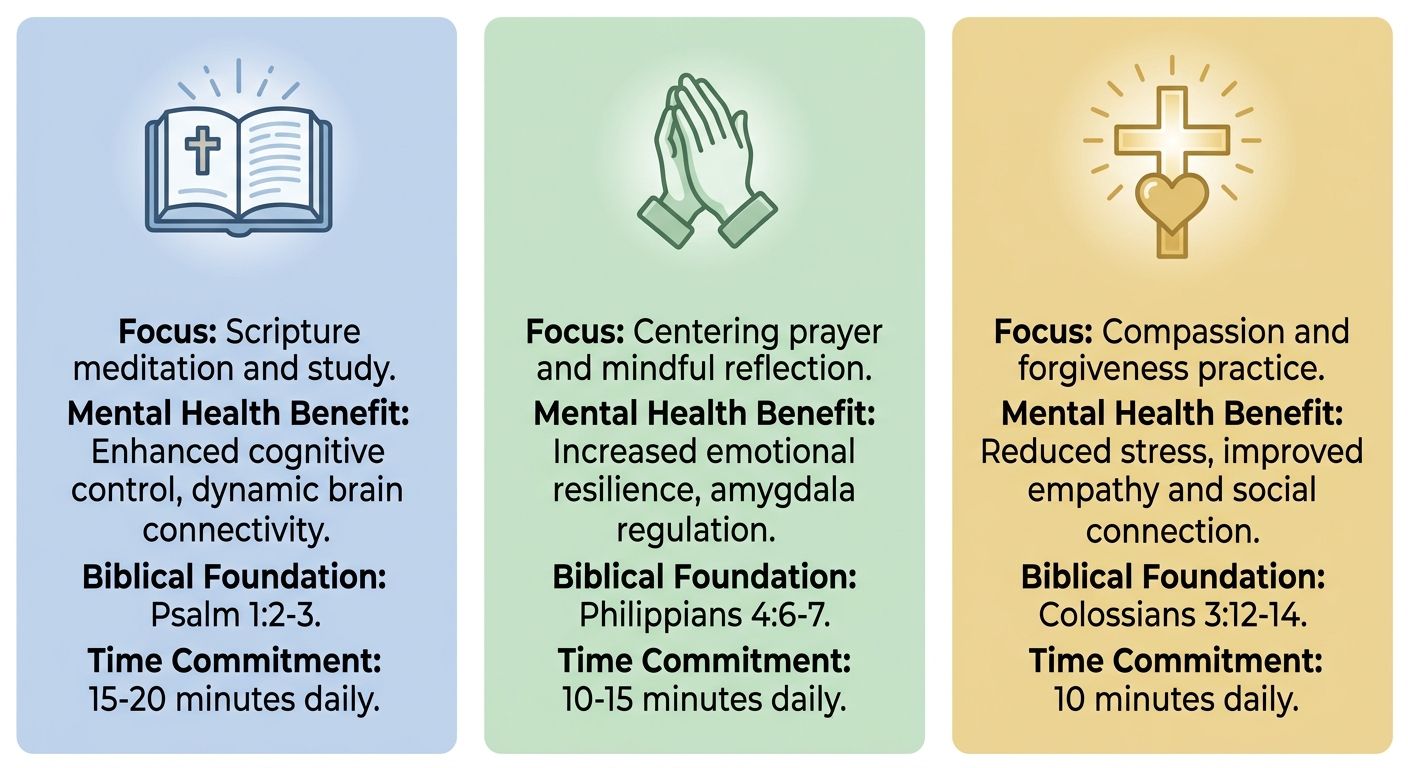
Daily spiritual habits rewire the brain for emotional regulation
This content is not a substitute for professional medical or mental health advice; consult a qualified professional where appropriate. Results may vary; individual experiences differ.
Starting Your Spiritual Routine: Scripture Meditation and Christian Mindfulness
Now that you understand the why behind a spiritual practice for mental health, let’s look at the how. Creating a daily rhythm of scripture meditation and Christian mindfulness doesn’t require hours of silence or a theology degree. It begins with small, consistent steps that anchor your heart in truth and slowly reshape how you respond to stress and anxiety. We have walked alongside many people who discovered that a gentle, grace-filled routine can create a sense of peace even on difficult days. These practices are spiritual disciplines, not clinical treatments, and they work best when approached as an invitation rather than a prescription. Start Your Journey today by choosing just one exercise from the options below and giving yourself permission to begin small.
A Step-by-Step Guide to Starting Scripture Meditation for Anxiety
When anxiety makes your thoughts race, scripture meditation offers a way to slow down and listen to God’s voice instead of the noise in your head. The S.O.A.P. method provides a simple, four-step framework that anyone can follow, even if you have never opened a Bible outside of Sunday service. Let’s walk through it together using Psalm 46:10: “Be still, and know that I am God.”
Scripture: Write the verse out by hand. Physically putting words on paper engages your mind differently than reading on a screen. Copy Psalm 46:10 slowly, letting each word land.
Observation: Notice what the verse actually says, not what you assume it means. God instructs us to be still—not to fix, strive, or figure everything out. He invites us to know Him, not just know about Him.
Application: Ask how this truth speaks to today’s anxiety. Perhaps your worry stems from feeling that everything depends on you. This verse gently reminds you that God is God, and you are not. Let that truth settle.
Prayer: Talk to God about what surfaced. You might say, “Father, I release my racing thoughts to You. Help me rest in the truth that You are in control.”
Many people find relief by spending five to ten minutes with a single verse rather than rushing through entire chapters. Consistency matters more than intensity.
Christian Mindfulness Exercises for Beginners
Christian mindfulness differs from secular meditation because it fills your mind with God’s presence rather than emptying it. These three exercises offer practical starting points grounded in biblical truth.
Centering Prayer: Choose a sacred word such as “Abba” or “Peace” that expresses your intention to rest in God. Sit comfortably, close your eyes, and silently introduce your word. When thoughts drift toward worries or to-do lists, gently return to your word without frustration. This is not about achieving a blank mind but about letting God’s presence become the center of your attention. Practice for ten to fifteen minutes, and remember that distraction is normal—returning to your sacred word is the practice itself.
Body Scan with Thanksgiving: Begin at the crown of your head and mentally move downward, pausing to thank God for each body part. “Thank You for my mind and the thoughts it holds. Thank You for my eyes that see Your creation. Thank You for my shoulders that carry daily burdens—I release them to You now.” This exercise combines physical awareness with gratitude, may help calm your mind, and connects your body to Psalm 139:14: “I praise you because I am fearfully and wonderfully made.”
Walking with Jesus Visualization: Imagine yourself walking beside Jesus in a peaceful landscape—a quiet forest, a lakeshore at sunrise, or a gentle meadow. Engage all five senses. What do you hear? Birdsong, lapping water, His footsteps beside yours. What do you see? Light filtering through leaves, His welcoming face. What do you smell? Fresh earth, wildflowers. Allow the scene to become vivid. In your mind, speak with Him naturally about whatever weighs on your heart. This practice draws on the truth that Jesus walks with us through every circumstance.
The table below compares four beginner-friendly spiritual exercises you can try today.
| Dimension | Scripture Meditation | Christian Mindfulness | Prayer |
|---|---|---|---|
| Primary Focus | Reflecting on specific Bible verses | Present-moment awareness with God | Conversation with God (petition, confession, thanksgiving) |
| Mental Health Benefit | Reduces anxiety by replacing negative thoughts with truth | Improves emotional regulation through non-judgmental awareness | Lowers stress hormone levels through surrender and trust |
| Biblical Foundation | Psalm 119:15, Joshua 1:8 | Philippians 4:6-7 (anxiety replacement) | 1 Thessalonians 5:16-18, Psalm 34:17 |
| Time Commitment for Effect | 5-15 minutes daily for noticeable change | 10-20 minutes daily for emotional regulation | Several minutes spread throughout the day |
Each exercise suits different emotional needs, from the instant grounding of breath prayer to the deeper reflection of scripture meditation. For digital tools that support each practice, explore our recommended christian self help apps, which our team has vetted to ensure they align with faith-centered principles.
Integrating Prayer, Reflection, and Music into Your Daily Routine
With a few simple exercises in hand, you can weave prayer, scripture, and worship music into a gentle fifteen-minute morning routine. Begin with five minutes of scripture reading—Psalm 139 works beautifully as a reminder of God’s intimate knowledge of you. Let the words settle without rushing. Next, spend five minutes in guided prayer using the Prayer Library, a free resource at Path to a Better Life that provides structured prayers for anxiety, gratitude, and daily surrender. Finally, close with five minutes of worship music from the Music Library, another free resource that helps shift your emotional atmosphere and refocus your heart on God’s goodness.
This simple rhythm doesn’t demand perfection. Some mornings you may linger longer in prayer; other days, two worship songs may speak to exactly what you need. The goal is not a rigid checklist but a living conversation with God that bookends your day.
Path to a Better Life provides spiritual resources for personal growth; these practices are not a substitute for professional medical or mental health advice. Consult a qualified professional where appropriate. Results may vary; individual experiences differ.
Once you have built a basic routine, you may want to read how others transformed their lives through our 21-day program. Discover a better life in just 21 days.
Deepening Your Practice: Advanced Spiritual Disciplines for Long-Term Mental Well-Being
Deepening our spiritual practice beyond the 21-day transformation is the bedrock of lasting mental well-being. A consistent spiritual practice for mental health is one of the most transformative habits we can develop, gently reshaping our inner world and fostering resilience, calm, and a grounded purpose.
Scripture meditation involves focused, reflective reading of a Bible passage—such as Psalm 23—and intentionally applying its truths to daily life. This form of Christian mindfulness anchors our scattered thoughts in God’s presence. When we pause to dwell on a verse, its meaning saturates our mind, replacing worry with trust. Over time, this Bible reflection cultivates a calmer, more hopeful interior.
Closely related is Christian mindfulness—intentionally bringing our thoughts back to God in the present moment. Unlike secular mindfulness, it centers on relationship with Christ. Simple actions like breath prayers or walking in nature become prayerful awareness. This gentle attentiveness shifts our focus from worry to worship, training us to rest in God’s steady love.
For seasons when we need deeper renewal, a Christian retreat offers a structured time away from routine to engage in extended prayer and reflection. Our own resource listings, compiled by Path to a Better Life, feature a variety of upcoming retreats for 2026—ranging from silent retreats in nature to guided Cursillo weekends. Stepping out of daily demands for a day or more allows us to hear God more clearly and return with fresh spiritual energy.
These disciplines bear lasting fruit when woven into a consistent daily rhythm. Building on the 21-day program, they become a way of life. If you desire guidance, a spiritual mentor can walk with you. These practices are not a substitute for professional mental health advice; consult a qualified professional where appropriate. Start Your Journey.
Common Questions About Spiritual Practice for Mental Health
Here are answers to common questions about integrating spiritual practices into daily life.
Q: What is spiritual practice for mental health?
Spiritual practice for mental health includes prayer, scripture meditation, and Christian mindfulness to foster emotional balance. While results vary, we see it as a complement to professional care.
Q: How does scripture meditation help?
Reflecting on Bible verses can ease anxiety and increase peace. Our free prayer library offers guided meditations to help you make scripture meditation a daily habit.
Q: What is Christian mindfulness?
Christian mindfulness focuses on God’s presence rather than secular techniques. For deeper study, a trusted Christian university offers programs integrating faith and mental health concepts.
Q: Can spiritual practice replace professional therapy?
No, spiritual practice cannot replace professional therapy or medical treatment. Always consult a qualified professional for serious concerns. Our resources support, not substitute for, clinical care.
Start your journey with Path to a Better Life’s free 21-day program, supported by our generous community.
Your Journey Toward Resilience Through Faith-Based Habits
Through spiritual practice for mental health, small daily faith-based habits can build resilience. Scripture meditation and Christian mindfulness nurture emotional strength gradually, helping us face challenges with steadier hearts.
Through scripture meditation, we prayerfully reflect on Bible passages, gaining calm and perspective. Through Christian mindfulness, we anchor ourselves in God’s presence, a practice distinct from secular approaches. These habits are supportive tools, not cures; they complement professional care. Over three weeks, they can begin to form a lasting foundation. This journey is offered freely as part of Path to a Better Life. Let’s dive into these two habits that can start shaping that strength today.