
Table of Contents
Beginning Your Christian Meditation Journey
Now that you understand the foundations, let’s explore Christian meditation for beginners. Christian meditation is a faith-based practice centered on Scripture and connection with God—no prior experience or equipment needed. Unlike secular mindfulness, which emphasizes emptying thoughts, Christian meditation fills your heart with God’s Word.
Starting your practice is simple:
- Find a quiet place to sit undisturbed
- Choose a short Bible verse that speaks to you
- Read it slowly and reflect for a few minutes
- Let the words settle into your heart
These first steps in Christian meditation open the door to a richer spiritual life. Our free 21-day transformation program offers Christian meditation for beginners a gentle guided entry along the road less traveled. The American Counseling Association recognizes faith-based wellness practices can support emotional and spiritual health. Remember, Christian meditation complements but does not replace professional mental health treatment. Start Your Journey today and discover how daily moments with God bring genuine peace to your life.
Preparing Your Heart and Daily Schedule
As we progress in our 21-day transformation program, proper heart preparation becomes the essential foundation before any technique. For christian meditation for beginners, setting aside intentional time transforms the practice from a simple habit into a meaningful encounter with God. According to the American Academy of Religion, intentional daily spiritual practices deepen one’s connection and discipline over time.
Begin by setting a clear intention each session. Quiet your mind for just a moment and consciously open yourself to God’s presence. Academic bodies such as the association of theological schools recognize the value of daily spiritual discipline in forming lasting faith habits. We recommend blocking a fixed time on your calendar—starting with just 5–10 minutes makes meditation for beginners in faith both sustainable and powerful.
- Morning: 7:00 AM before checking devices
- Lunch break: 12:30 PM for a midday reset
- Evening: 8:00 PM after dinner for quiet reflection
Use our One Minute Rule as a simple daily devotional anchor within any schedule. With the Traveling Companion membership, you receive encouragement and accountability to stay on this Path to a Better Life. Eliminate distractions like phone notifications or background TV during your meditation window so you can truly Start Your Journey.
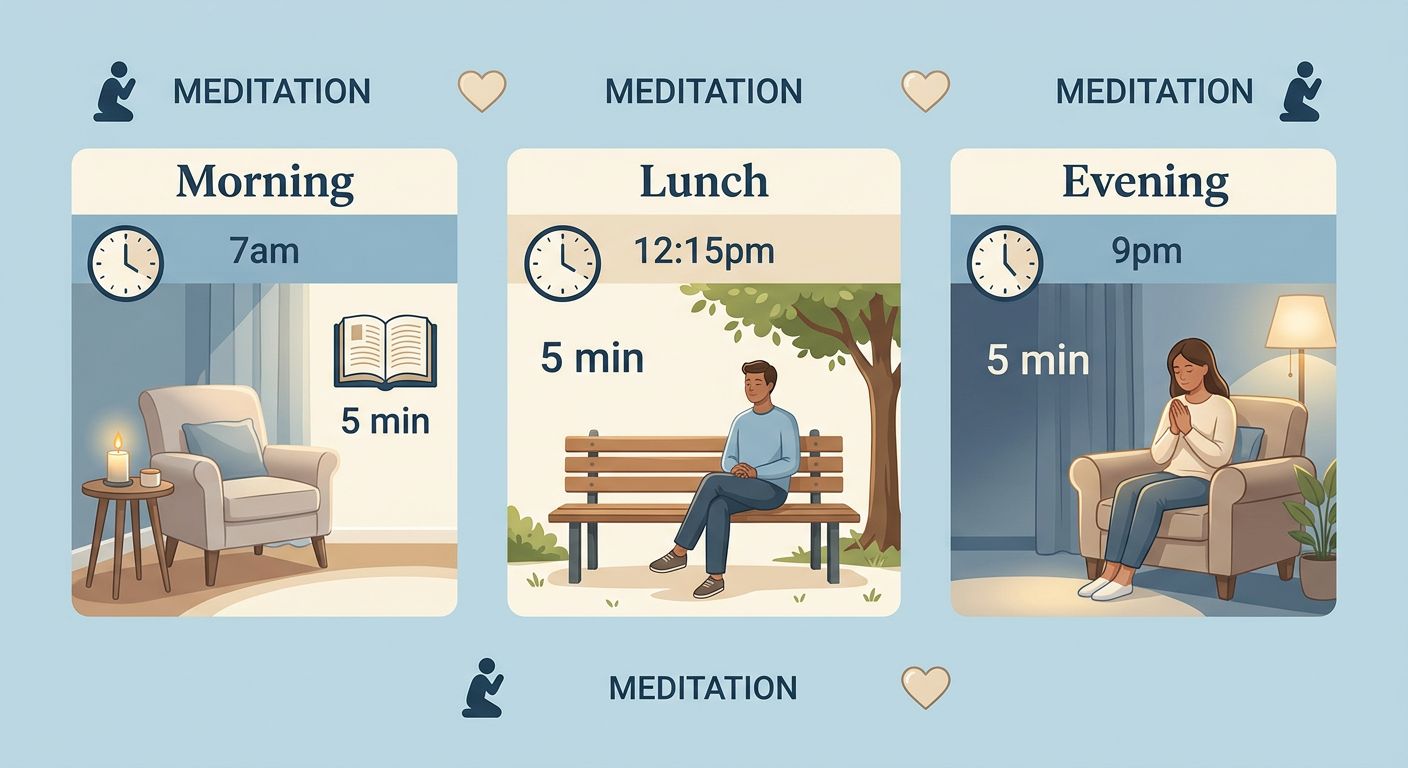
Three simple daily meditation time blocks for heart preparation.
With your heart ready and your schedule set, let’s explore the first meditation practice. Remember, spiritual growth is a personal journey and results may vary based on your commitment and circumstances.
Finding a Quiet Space and Comfortable Posture
Now that you understand the basics of Christian meditation, let’s explore where and how to sit. For those new to christian meditation for beginners, finding a quiet space is essential. Choose a consistent spot — a room corner, prayer nook, or peaceful outdoor bench — free from distractions.
Sit upright with feet flat on the floor, or kneel with hands folded. These positions keep you alert without tension. Avoid lying down, as it leads to drowsiness. Close your eyes or rest your gaze on a cross or candle to center your mind.
The Professional Chaplains Association describes sacred space and reverent posture as foundational spiritual practices. Using the same space and posture each time signals your mind that it is time to be still with God. Adjust for comfort, but avoid slouching or reclining.
Once settled, you can begin focusing on God’s presence.
This content is for spiritual growth and is not a substitute for professional mental health treatment.
Focusing on a Short Scripture Passage
Christian meditation for beginners is a spiritual discipline that anyone can embrace without special training or materials. We select a brief, meaningful verse—perhaps Psalm 23:1 or John 3:16—and read it slowly, multiple times, allowing each word to settle into our hearts. This simple Christian meditation practice requires only a few quiet minutes each day, yet it opens space for genuine connection with God.
As we gently repeat and ponder the passage, we move beyond reading for information and begin to internalize God’s Story. The Association of Theological Schools, which accredits over 270 graduate theological institutions, affirms that focused Scripture meditation is central to spiritual formation and growth. We are not performing an academic exercise; we are creating room to hear God speak to you today through His living Word.
This accessible spiritual practice deepens our meditation on Scripture and prepares our hearts to listen more intentionally. When we dwell on a single verse, we cultivate the stillness and attentiveness that allow us to recognize God’s voice—a posture we will explore further in the next section.
Breathing Through a Simple Prayer
For those exploring christian meditation for beginners, breathing through a simple prayer is a foundational spiritual practice. We focus on each inhale and exhale, silently pairing the rhythm with a short, heartfelt phrase like “Lord, have mercy” or “Speak, for your servant is listening.” This gentle exercise aligns with Christian meditation, inviting us to fill our minds with God’s word rather than emptying them. The Professional Chaplains Association recognizes the importance of prayer in spiritual care, and we see this practice as a natural extension of that tradition. It is easy to try anywhere—during a quiet moment at home, on a break, or even in a waiting room—requiring just a few minutes. We encourage you to make it a daily rhythm on your path to a better life, trusting it can help you hear God speak to you today. Please remember: this practice supports spiritual well-being and is not a substitute for professional mental health treatment. Individual experiences and transformation outcomes differ from person to person.
Sitting in Silence to Listen for God
After reading God’s Story, the next step is to sit in silence and listen. Christian meditation for beginners starts here—we intentionally create quiet space to attune to God’s voice. Unlike Eastern meditation, our focus is relationship, not emptiness. Simply find a quiet place, sit comfortably, and turn your attention toward God. Listen openly. A Scripture may surface, an impression may form, or peaceful stillness may settle. Distractions are normal; when they arise, gently return to His presence. Hear God speak to you today, really it’s that simple. At its heart, Christian meditation for beginners is about learning to rest in God’s presence and recognize His voice. This practice of listening to God in silence deepens our intimacy with the Creator. Individual spiritual experiences vary, and this practice complements but does not replace professional mental health care. Once you taste the power of silent listening, our Traveling Companion program offers daily guidance for your journey ahead.
Journaling Your Reflections and Insights
As we continue exploring spiritual practices, journaling becomes a concrete daily habit that deepens our connection with God. For those beginning Christian meditation for beginners, putting pen to paper helps ground our thoughts in Scripture. Our 21-day transformation program encourages this simple yet powerful practice to track insights and answered prayers.
Reflective journaling isn’t about perfect prose — it’s about recording daily blessings, questions for God, and moments of clarity. The Association of Theological Schools highlights how reflective journaling shapes theological formation and spiritual maturity. We find it especially helpful for meditating on a verse, letting God’s Word linger in our hearts.
Spiritual progress varies, and journaling never replaces professional mental health support. Even a few sentences each day can foster transformation. Next, we’ll explore other beginner-friendly meditation techniques to enrich your time with God.
Results may vary based on individual spiritual commitment and circumstances. This program is for spiritual growth and is not a substitute for professional mental health treatment.
Incorporating the One Minute Rule into Your Day
Building on that simple rhythm, the real question is how to weave the One Minute Rule into a busy schedule. For many, christian meditation for beginners can feel overwhelming, but this practice breaks down that barrier. We invite you to Start Your Journey by choosing a consistent daily moment—right after waking or just before sleep.
Consistency matters more than length. Even sixty seconds of focused Christian meditation practice can create meaningful spiritual space. The American Academy of Religion affirms that short, daily spiritual practices hold significant value for personal development. Here is a gentle approach:
- Focus on one short prayer, such as the Lord’s Prayer
- Reflect on a single verse like Psalm 46:10
- Hold one gratitude in your heart
Begin with just one minute. As the habit forms, you may naturally extend your time. This makes the one minute rule a perfect entry point for meditation for beginners, especially those convinced they have no time. Remember, each spiritual journey is unique, and results may vary, but this small step opens a gentle path toward deeper connection.
Closing Your Practice with Gratitude and Prayer
When you are a beginner in Christian meditation, how you close your practice matters. Ending our time with gratitude and a simple prayer helps us acknowledge God’s presence and the gifts we received. This final posture of thankfulness completes our session and prepares us to carry that spirit into the rest of our day.
According to the American Counseling Association, integrating spirituality and prayer into reflective practices can support well-being. We can follow a simple closing structure: a moment of silent reflection, a prayer of thanks, and a gentle transition. In your Christian meditation for beginners practice, you might say, “Thank You, Lord, for this time with You. Help me carry Your peace into my day.” Feel free to personalize this to deepen your connection with God.
Consistency in closing enhances growth and may deepen your sense of peace. Results vary by spiritual commitment, and this practice is not a substitute for professional help. Try it daily to enrich your journey.
Overcoming Common Challenges for Beginners
As you step into the practice of Christian meditation, you may face challenges that test your commitment. If you’re beginning your journey in christian meditation for beginners, wandering thoughts or impatience might tempt you to quit. These struggles are normal, and we’re here to offer faith-based strategies to help you persevere.
Three frequent challenges:
- Difficulty concentrating: Use Philippians 4:8 as your anchor—focus on what is true, noble, and right. When your mind drifts, gently return to the verse or a simple prayer.
- Impatience for results: Spiritual growth is gradual and unique to each person. Release the need for immediate change and trust the process.
- Finding consistent time: Even a few minutes daily can build a habit. Start with short, guided exercises rather than lengthy silent sessions to reduce overwhelm and build sustainability.
The American Counseling Association recognizes meditation as a stress-management tool that supports your well-being. The American Academy of Religion’s scholarship confirms meditation’s deep roots in Christian tradition, practiced for centuries. For meditation for new believers, consistency matters far more than duration.
We encourage you to keep sessions brief initially, building confidence over time. Remember, starting Christian meditation is a journey—our resources are here to support you. At Path to a Better Life, we believe God honors your sincere effort, however small. This content is for spiritual growth and is not a substitute for professional mental health treatment.
You’re now equipped to establish a simple daily practice. In the next section, we’ll walk through a routine you can begin today.
Your Journey Toward a Deeper Relationship with God
We all long for a closer connection with our Creator. This journey is a personal, ongoing process that deepens prayer and opens our hearts to God’s story. For those exploring Christian meditation for beginners, it offers a gentle way to quiet the mind and listen for God’s voice. Respected organizations like the Association of Theological Schools and the Professional Chaplains Association support spiritual growth by upholding standards for theological education and chaplaincy care.
Your path is unique, and progress depends on your commitment. There are no guaranteed outcomes. Individual spiritual experiences and transformation outcomes differ from person to person. That’s why we invite you to Start Your Journey with our free 21-day program, a crowd-funded initiative without financial barriers. This content is spiritual in nature and not a substitute for professional mental health care. As you explore a deeper relationship with God, stay open to the gentle practices we’ll introduce in the next section.