
Table of Contents
- Finding Hope for a Wounded Spirit
- What Are the Signs That Someone Has a Wounded Spirit?
- The Roots of Spiritual Injury and Its Emotional Toll
- Daily Practices for Healing and Resilience
- Integrating Faith and Professional Support for Lasting Recovery
- Common Questions on Spiritual Healing
- Your Path to Spiritual Healing and Growth
Finding Hope for a Wounded Spirit
If you’ve been wondering what the signs of a wounded spirit are, the answer often appears as persistent sadness, anger, or an emptiness that won’t lift. A wounded spirit is that deep inner ache we carry when trauma, loss, or prolonged struggle leaves us feeling broken and alone. It can feel like a heavy weight on your soul, dimming the joy.
Your suffering isn’t isolated in this world because many of us also trod on the same path that you’re now taking.
A broken heart hurts when the heart has been bruised over time by past abuses, loss, depression and having our dreams crushed slowly. A wounded soul loses its joy, but there is always hope. At Path to a Better Life, we have found that simply being honest about the pain can lead to healing.
Practices that are gentle, compassionate support, and a community of care can help restore your spirit. Free to you. Our prayer library, guided reflections on scripture and life, and crisis support are available to everyone in our midst who needs a safe place to land. We will not be providing clinical treatment. Instead, we aim to heal through a faith-first approach. No matter how new or old your struggle may feel, know there is always a path forward.
Understanding what signals your own soul has been injured can be a key factor in its repair.
Key Takeaways
- What is the answer to Proverbs 18:14?
- A wounded spirit is a burden beyond bearing, a sin that destroys what ought to make us strong.
- A wounded spirit often feels like an invisible weight that drains joy and motivation.
- When it comes to this question many wonder if they can incorporate spiritual healing in their recovery process.
- If you notice any evidence that you need help healing from your heart, you don’t have to be alone about this.
What Are the Signs That Someone Has a Wounded Spirit?
What is the answer to Proverbs 18:14? The spirit of a man shall sustain his infirmity, but a wounded spirit? How we miss the anguish of the soul, whose heart and spirit have been crushed beneath shame and guilt and God’s absence. Wounded spirit does not mean that the individual cries occasionally; he lives in a constant agony, a dull pain that cannot be dulled by external means. This agony shatters the possibility of drawing near to other people or God himself.
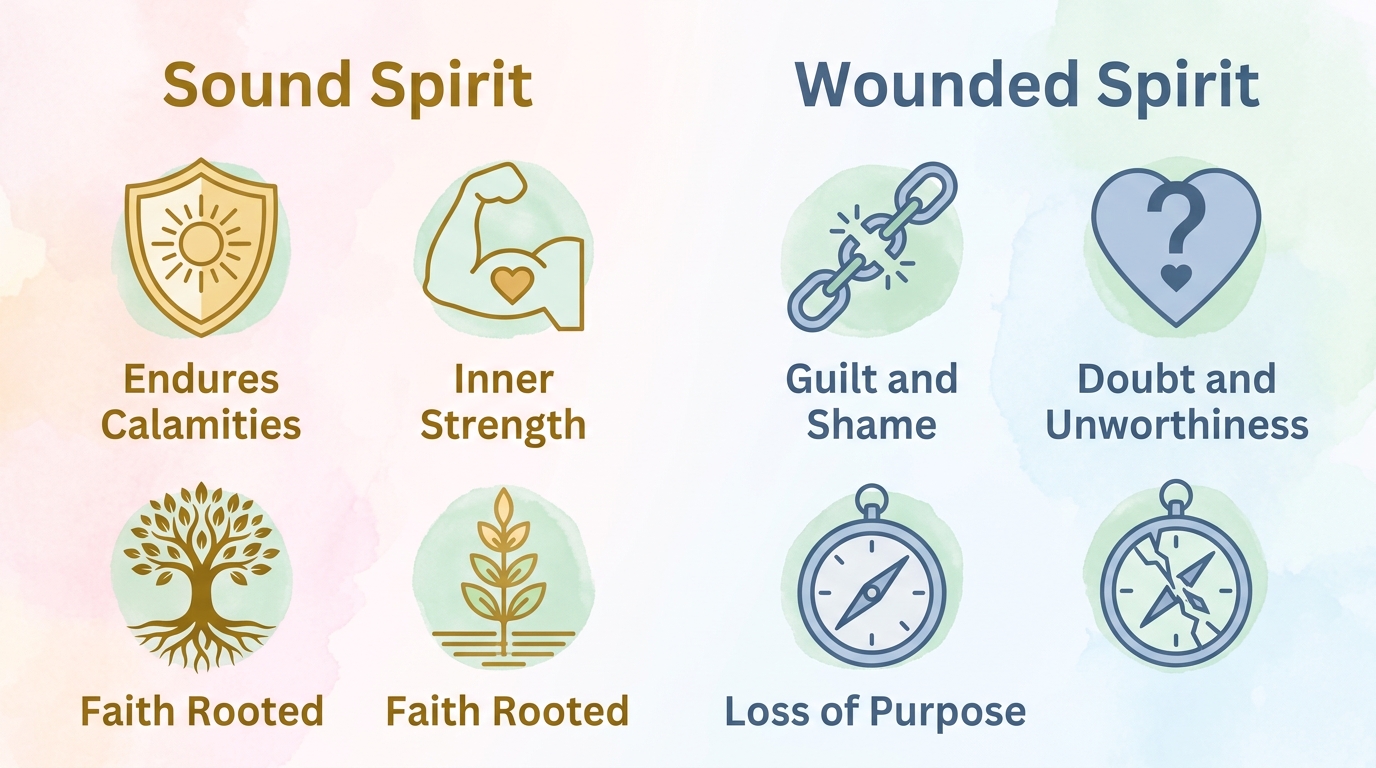
The table in question refers to 17th-century lessons comparing a healthy mind state versus one that has been damaged.
| Aspect | Sound Spirit | Wounded Spirit |
|---|---|---|
| Response to hardship | Bears affliction with patience and even cheerfulness, drawing strength from God’s comfort. | Feels crushed under any pressure; no external remedy brings relief. |
| Sense of peace with God | Lives in the assurance of God’s love and favor, remaining impregnable against spiritual assault. | Experiences God as distant or angry; guilt weighs down the conscience. |
| State of the conscience | Kept clear through repentance and faith; stands as a supportive witness. | Accuses relentlessly, or becomes seared and numb through unconfessed sin. |
| Ability to endure guilt | Can face guilt, confess, and find restoration; the spirit stays sound and teachable. | Guilt becomes an intolerable burden, leading to despair or a hardened, deadened state. |
These writers argued, as we know from other writings, that no man is forced to carry a troubled soul. God’s goodness provides consolation during trials, whereas God’s forgiveness heals pain and guilt when a sinner admits his wrongdoing and turns towards others for support.
This isn’t meant to be a label we all should take on, but instead something to consider about ourselves.
At Path to a Better Life, our free 21-day Transformation Program builds daily rhythms of prayer, scripture, and reflection that gently restore inner peace. Our prayer hotline at (512) 628-4600 gives you a safe, confidential place to talk and be prayed for at any hour. We also keep directories that can guide you to licensed professional counseling when clinical care is needed. Getting over a bad heart takes time and it takes help, but you don’t have to go through it all yourself.
The Roots of Spiritual Injury and Its Emotional Toll
A wounded spirit is a burden beyond bearing, a sin that destroys what ought to make us strong. According to a 17 th-century theologian, outer evils such as misfortune and illness can at least be supported; but a wounded conscience will sap our inner strength till we sink to ruin.
The Nature of a Spiritual Injury
Contrast the wounded spirit and the sound spirit, renewed by grace, bearing all things patiently and hoping in the end. The spirit, however, which is thus wounded, as the author puts it, shrinks up within itself. It is not the external calamity that can oppress man, but his inner guilt, and his feeling of separation from God’s peace. Even he who lives piously, a godly person, may suffer a wound, if sin, doubts, or the feeling of God’s absence get into him. It’s true, though, that a good heart sustained by God’s grace can hold up under all kinds of adversity when it relies upon divine comfort instead of its own timorous nature. And this sort of wounding that has come upon them is so great in degree that they carry it along wherever they go, so much so that there’s almost always something around to weigh them down. The spiritual injury which is done by a wounded heart isn’t a mere depression; it’s a very sore and grievous trouble.
Emotional and Behavioral Red Flags
Examining the documents describing these cases, we see several recurring signs of a wounded spirit that carry real consequences.
| Spiritual Sign | Description | Everyday Impact |
|---|---|---|
| Persistent Guilt | A crushing burden from sin that wears down inner strength, as described in the 17th-century theological treatise. | Loss of hope and motivation. |
| Deep Shame | Feeling unworthy of God’s love, a case of conscience identified in the spiritual burden treatise. | Withdrawing from faith and community. |
| Loss of Purpose | Constant doubt that clouds one’s sense of direction, linked to the persistent doubt discussed in the treatise. | Difficulty making decisions and engaging in daily life. |
Guilt can be so persistent that it robs a person of the energy to pursue even simple daily tasks, whereas shame can create isolation that cuts off the very support needed for healing. Finally, the loss of a clear sense of direction can further complicate recovery, leaving an individual stuck in a cycle of indecision and disengagement.
When Spiritual Pain Mirrors Mental Health Struggles
Sometimes our spiritual pain looks like other psychological issues. It looks like deep sadness, exhaustion, and constant worry. This ancient guidance also distinguished between real spiritual distress and ordinary melancholia, today’s version of a physical or clinical condition. But because both of them seem to happen inside us, it would be easy for someone to make a mistake about which was which. We need to avoid diagnosing ourselves. No list of spiritual signs can substitute for talking things out with a qualified counselor or medical practitioner. And at the same time, if we know what kind of spiritual pain we’re suffering, we have better odds of healing from it. Recognizing its sources and the emotional pain of being in spiritual distress should not be the end of the story, but only the beginning of the next chapter: the one where the pain is tended to in daily practice.
Daily Practices for Healing and Resilience
Once you recognize the signs of a wounded spirit, the next step is to take gentle daily actions that restore strength and build resilience. As a crowd-funded organization, Path to a Better Life makes every resource described here available at no cost.
Here’s what you need to know about the key resources we offer to support daily spiritual care:
Path to a Better Life Resources Supporting Spiritual Healing
| Resource | How It Helps | How to Access |
|---|---|---|
| 21-Day Program | Provides structured daily reflection to address a wounded spirit | Enroll online for free at pathtoabetterlife.org |
| Prayer Library | Offers guided prayers for emotional and spiritual renewal | Access through the website or member profile |
| Music Library | Features curated music to calm the spirit and inspire hope | Stream or download from the member dashboard |
| Traveling Companion Membership | Delivers ongoing encouragement, devotionals, and community connection | Sign up as a member at no cost |
| Crisis Hotline | Provides immediate prayer and emotional support in moments of distress | Call or chat from the Urgent Help section |
Every resource covers a separate area in terms of day-to-day spiritual care. Here we’ll see how all the pieces can fit together and form a simple routine that can be sustained.
Starting Your 21-Day Guided Transformation
If a wounded spirit begins to feel weak and unsure of itself, a daily routine can offer some needed reassurance. Our free 21-Day Program offers a guided journey of brief reflections and simple practices designed to help you move from awareness to renewal one gentle step at a time. It’s all free.
The daily sessions encourage you to take notice of whatever feels like a burden for your heart, using easy prompts and small actions that you can complete while in a state of relative stillness. There’s no obligation to achieve anything specific; you can start this journey whenever suits you and move forward over these 21 days at a pace which allows you to conserve your own emotional reserves.
Using Prayer and Music to Renew Your Spirit
Prayer and music can become constant anchors, giving rhythm and reassurance when emotions feel unsettled. Our prayer library provides prayers that guide us through common experiences of grief, anxiety, and longing, and you can choose a morning or evening prayer that fits your needs.
Music is included in the library, designed to be played for a few moments when you’re nervous, during a quiet walk home from work, or as part of the simple act of brewing some tea. It serves to remind you, silently but persistently, that you’re not alone.
Building a Supportive Community Around Your Journey
It heals our hurt spirit when we gather together. The Traveling Companion Membership is optional and no-cost, and it lets us receive devotionals, periodic encouragement, and connection with other folks who are on a similar path.
A crisis hotline is there if you feel emotionally overwhelmed, and we connect callers with caring listeners who pray over the phone and listen empathetically. It will NOT replace therapy, but can be a source of temporary comfort when needed. Callers should access this hotline via the urgent help section of the website, any time they experience overwhelming emotions.
In fact, daily activities like these lay a strong foundation for lasting resilience. At certain points in their lives, people may add spiritual routines with professional guidance for deeper healing, and we recommend taking this step whenever they feel ready.
Integrating Faith and Professional Support for Lasting Recovery
A wounded spirit often feels like an invisible weight that drains joy and motivation. At Path to a Better Life, we believe spiritual practices—prayer, scripture reading, uplifting music, and our free 21-day transformation program—can bring comfort and renewed perspective. But we also understand that some emotional struggles and mental health challenges need the specialized care of a licensed professional. Recognizing the difference and knowing when to reach for both kinds of support is a crucial part of healing. Common situations include signs that spiritual resources may help and signs that professional therapy is needed.
| Need | Spiritual Practice (Path to a Better Life) | Professional Therapy |
|---|---|---|
| Emotional distress (e.g., sadness, discouragement) | Prayer, scripture reading, and the free 21-day program for comfort and perspective | Counseling if distress persists or worsens |
| Crisis situation (e.g., suicidal thoughts, self-harm) | Immediate prayer hotline (24/7) and urgent help resources | Immediate professional intervention: call 988 or emergency services |
| Addiction recovery | Addiction recovery resources directory on Path to a Better Life, prayer, and personal transformation stories | Licensed addiction counselor and medical detox program |
| Relationship or marital strain | Curated books on relationships, prayer, and transformation stories for guidance | Couples therapy or individual counseling |
Spiritual growth and professional counseling go hand-in-hand toward whole-person recovery. You’ll find our spiritual offerings, from prayer and music to transformative stories, in the prayer library and other places here on the site, designed to nourish your soul, although these free resources should not take the place of professional treatment when needed. Pursuing counseling is a brave move when you require a therapist’s trained perspective. The goal here is not to choose between spiritual and secular therapy but to think instead about them as separate aspects of the same road to health. We encourage you to lean into both paths and trust that combining them can bring lasting peace. With this information about the nature of spiritual healing, we know that lots more questions will pop up, and we’re eager to help as you proceed down your path.
Common Questions on Spiritual Healing
When it comes to this question many wonder if they can incorporate spiritual healing in their recovery process. We would like to list several things we have heard others say about spiritual healing:
What are the signs of a wounded spirit?
A wounded spirit may appear as hopelessness, emotional numbness, or a sense of disconnection from faith. These feelings are not a diagnosis but signal inner distress that spiritual support can soothe.
Can spiritual healing replace therapy?
Spiritual practices nurture resilience and hope, yet they are not a replacement for professional mental health treatment. Depression or PTSD requires licensed care, and our resources complement therapy, not substitute.
What free resources can help me start?
You can begin with our Prayer Library, Music Library, and Transformation Stories. These free, no-pressure tools help you explore spiritual healing gently.
Those responses will lead you in their own ways to paths of personal spiritual development and healing.
Your Path to Spiritual Healing and Growth
If you notice any evidence that you need help healing from your heart, you don’t have to be alone about this. The free 21-day plan is our way of offering an easy entry into spiritual healing without having to sign up for anything. Healing happens slowly and we will provide whatever information you can use along the journey as we go. Look around our website at various prayer guides, songs, testimonies about those who have been changed and grown through these tools. For continued growth in your personal life, become a member of our community. Note: this information does not replace any other form of professional medical or psychological care; results vary; privacy policy & terms of use apply.
Start Your Free 21-Day Journey
You’ve learned to recognize the signs of a wounded spirit, from persistent guilt and shame to loss of purpose. Taking the next step toward healing doesn’t have to be overwhelming or costly. Our free 21-day transformation program offers a gentle, structured path to spiritual renewal. Each day, you’ll find guidance through prayer, uplifting music, and reflection exercises that help restore hope. As a crowd-funded nonprofit, Path to a Better Life provides these resources completely free of charge. You don’t have to face this journey alone—our supportive community and Traveling Companion membership are here to walk with you. Visit our website to begin your journey toward a stronger, more peaceful spirit today.
Start Your Free 21-Day Journey