
Table of Contents
Spiritual Habit Formation for Families Made Simple
Spiritual habit formation for families begins with simple, everyday practices that create space for shared family faith without being too complex. Instead of buying a complicated program, families can start small by creating a one-minute prayer rule, doing some brief Scripture reading and looking for little ways they can be together in their faith as part of their schedule. Our free 21-day guided transformation allows families to start there, take the next step with the next day’s guidance and gradually grow into those new practices without feeling overwhelmed.
They form relationships rather than buying influence, and create stability and a sense of shared identity in family life. As Tim Challies puts it, family devotions declare to everyone what this family is all about publicly, modelling for the children the kinds of private rhythms that they might eventually develop for themselves. The cumulative effect of these little repeated times is unity and long memories.
First of all, families should have reasonable expectations regarding the speed of development and the occasional imperfections that may be part of daily life.
Key Takeaways
- Spiritual habit formation for families starts with realistic expectations rather than perfect performance.
- First, we need to start practicing these rhythms ourselves before we get together as a family.
- After selecting a constant time and place, you’ll need to decide how much to read.
- When kids are used to small rhythms, they become lasting habits for their children.
- As teenagers experience the pressures of school and changing friendships, spiritual resilience looks like coming back to the peace that is our birthright after setbacks.
Before You Begin: Set Realistic Expectations
Spiritual habit formation for families starts with realistic expectations rather than perfect performance. Family devotionals are simply times when you and your kids get together to read the Bible and pray in your house, not a church service at home. We don’t aim to have flawless devotionals or sit down for endless reading; we just look for a rhythm that works for our lives as a family.
Start small, with five to ten minutes as a good starting point, and even one verse will work when you are super busy. Remember, the One Minute Rule tells us that consistency beats intensity. Five minutes is better than none at all. And parents, your own devotional life comes first. Your kids will watch what you do, so if you build your own habit first before doing family devotions, you’ll be modeling the practice out of choice rather than obligation.
Be kind to yourself. Not every day will feel long or perfect, and that’s okay. It’s the practice that changes hearts, not the other way around. This isn’t about accomplishing a particular goal spiritually; it’s about showing up, day after day, with honesty and love.
Step 1: Model the Habit First
First, we need to start practicing these rhythms ourselves before we get together as a family. Children watch us, not listen to us lecture. Deuteronomy 6:6-7 and Ephesians 6:4 both tell us that God’s instruction starts with our hearts before flowing down to our children. Modeling isn’t about perfectness, it is about showing our kids how it looks to seek God in our everyday moments.
A simple morning prayer over coffee or reading Scripture while we eat breakfast can be a quiet invitation for our kids to ask questions. They watch us turn to God in the everyday life around them, and they start to realize that spiritual habit formation for families is normal, not forced. Our consistency talks more than we do.
As we practice privately, the rhythms of our family follow naturally. It’s us first, then our kids copy what they’ve observed living around us.
Step 2: Choose a Consistent Time and Place
Having established that we want to model this for our children, the practical next step is to tie the habit to a time and place. Having a fixed slot in our routine removes daily decision fatigue about when and where to do it, and makes showing up feel effortless rather than optional. We may be sipping our morning coffee at the table, settling back into the favourite chair after lunch, or getting ourselves home during rush hour traffic, but what matters most is that there is some place we walk past every single day.
Have a Bible, or reading app on your phone, available at that chosen spot so you’re ready to open it when prompted. Five to ten minute sessions are enough to get us started; this habit is about showing up, not about how long or intense it needs to be. If a couple weeks goes by and the anchor point hasn’t worked, we can change the time or location without any guilt; the point is gentle consistency, not perfection.
What matters is to start with something small that has a natural rhythm.
Step 3: Start Small with Gentle Entry Points
After selecting a constant time and place, you’ll need to decide how much to read. Begin by reading a really small amount, just five to ten minutes or one to two chapters, in order to make the routine seem easy instead of overwhelming. We’ve learned that small, daily efforts build a habit more easily and consistently than grand (and often inconsistent) starts.
On your busiest days, the One Minute Rule offers a lifeline: read even a single verse. This isn’t about perfection; it’s about showing up, even briefly. Pair your session with a brief pre-reading prayer to gently frame the moment, grounding your time in intention rather than obligation.
For people wanting some structure, our free 21 day transformation programme takes you through these small entry points like the one minute rule etc without making any promise about what will happen – just setting the rhythm. Once these small habits feel normal to you then the next step is to start sharing them with your family and creating the routines we all carry in our heads, which last over generations.
Step 4: Build Spiritual Habits for Kids
When kids are used to small rhythms, they become lasting habits for their children. Start by modeling this quiet time on our part. Kids notice whether we put priority on Scripture and prayer or not. Family devotions can be pretty simple – read together a short passage, ask them what it means to them, then close with a prayer. Using a passage that talks about our season really helps the kids understand how God’s Word applies in their life.
Older kids dig deeper by asking questions and drawing connections between theology and real-life choices. We look out for spur-of-the-moment opportunities too: a question at bedtime or a hard day at school can be a chance to point our kids towards Jesus. Deuteronomy 6:6-7 and Ephesians 6:4 tell us that this isn’t just a routine; it’s how we pass on our faith from generation to generation.
Step 5: Teach Teens Spiritual Resilience
As teenagers experience the pressures of school and changing friendships, spiritual resilience looks like coming back to the peace that is our birthright after setbacks. The S.O.A.P. Approach, Scripture, Observation, Application, Prayer, helps them see their schedule. Adding a Body Scan with Thanksgiving helps them stay centered on God’s presence, and breath prayer is a portable tool they can use for stress relief prior to an exam or after conflict. Research from Azusa Pacific University may show that these practices may reduce cortisol levels and decrease reactivity in the amygdala, but we approach the research cautiously.
Remember though, that these exercises are meant to complement professional mental health care and are not a substitute for it. If your teen’s anxiety continues or worsens, we suggest contacting a counselor or another trusted professional in both Canada and the U.S. This spiritual habit formation for families will continue into their teen years as well, which prepares them for the regular practice of daily reflection later on as young adults.
Step 6: Guide Young Adults with Daily Reflections
We think it would be helpful to expose young adults to simple, structured reflective practices that fit into their daily lives. The S.O.A.P. framework – Scripture, Observation, Application, Prayer – is a straight-forward four-part process that can be completed in a few minutes a day as they read through scripture. It allows them to observe what scripture might be saying into their lives, whatever stage they’re at in school, work, or relationships.
breath prayers can be useful when you’re stressed out and on the go. They are brief prayers that combine a scripture verse with your breathing pattern, anchoring anxious thoughts in faith instead of letting them run wild. For example: Inhale "Jesus, light my path," exhale "guide my steps." These are not meant to replace professional care but rather accompany it.
Our free 21-day transformation program offers a gentle entry point for building consistency without pressure. It’s written specifically for young adults, respecting their independence while walking alongside them in their spiritual journey.
Step 7: Anchor Your Routine with Prayer and Worship
A little consistent prayer practice can set a family’s day like a calm heartbeat. Even a one-minute prayer rule, one of the three daily habits in the 21-day program, can become the soothing rhythm that establishes your family’s spiritual habit.
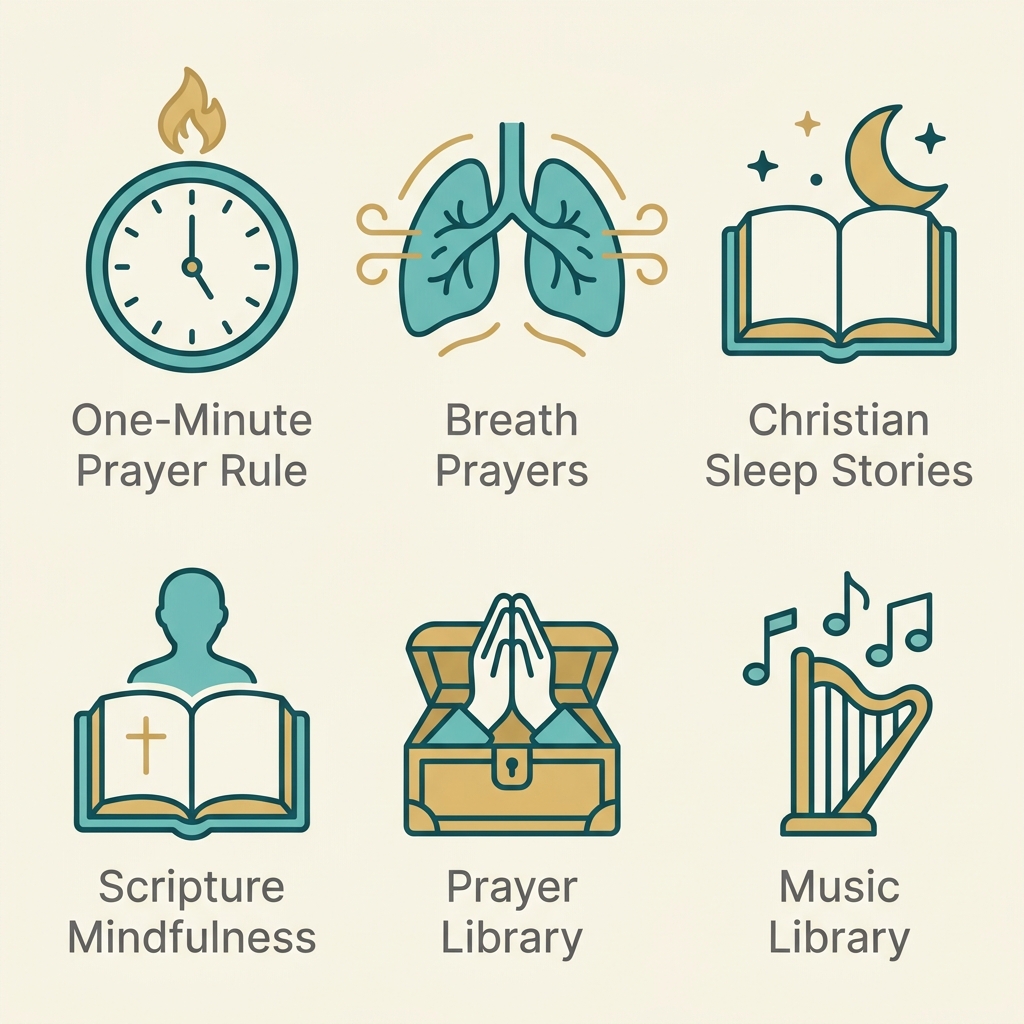
Start small, add a quick prayer to an existing routine that already has structure. Maybe you say a prayer before a meal or right before going to bed. As the act becomes a regular part of your schedule, it will become a place where you naturally take a break, breathe, and reconnect. Digital tools such as breath prayers for anxiety, Christian sleep stories and scripture-based mindfulness can also serve as guides for quiet reflection.
When the routine slips—as it sometimes will—simply start again.
What to Do When Your Family Routine Falls Apart
We all have weeks when the rhythm of family devotions or shared spiritual moments gets knocked off course. Busy seasons, unexpected illness, or simply the weight of daily demands can leave even the best-laid plans in disarray. Instead of waiting for the perfect moment to return to your full routine, consider shrinking your commitment to something sustainable—even a single verse read aloud or a brief prayer together can keep the habit alive.
One minute is the lifeline on those days when there simply seems to be no time at all. One verse, one prayer… one minute that you read or pray maintains the momentum but without any pressure. It’s not about being perfect… it’s just about being present, however briefly, in order to nurture our family’s common faith. One time, one place… maybe just five minutes sitting down at the kitchen table… will keep us in check until things return to normal.
It’s about growing in relationship, not earning favor back. And when we get back there, we’re not paying off some kind of spiritual debt; we’re simply being present with our God and present with our people. Our kids learn how we recover from the disruption in life, and our returning to a simple routine becomes part of the training for a life of habits.
Even the tiniest shared thing – a verse or a prayer, for instance – can keep the rhythm going until you can build up your family’s routine again.
Frequently Asked Questions
How to start a family devotional routine?
Family devotional routines begin by modeling the habit first. Parents should establish their own brief daily Scripture reading and prayer, then invite children to join at a consistent time and place. Start with five to ten minutes or even one verse on busy days. The One Minute Rule helps maintain consistency without pressure.
What are gentle entry points for families into faith discipline?
Gentle entry points include a one-minute prayer rule, reading one verse or a short passage, and using simple frameworks like the S.O.A.P. method. The free 21-day transformation program guides families through small daily steps without overwhelming expectations.
How to teach teens about spiritual resilience?
Teens can build spiritual resilience by practicing the S.O.A.P. framework, body scan with thanksgiving, and breath prayers for stress relief. These tools help them return to peace after setbacks and complement professional mental health care when needed.
What are the best daily reflections for young adults?
Young adults benefit from structured reflections like the S.O.A.P. framework, which takes a few minutes daily. Breath prayers offer portable stress relief, and the free 21-day program provides a gentle, structured start to daily spiritual habits.
How to balance family life with a daily spiritual rhythm?
Balance is achieved by tying spiritual practices to existing routines, such as morning coffee or bedtime. Start small with five to ten minutes or even one minute on busy days. Consistency matters more than intensity, and digital tools like breath prayers or Christian sleep stories can fit into varied schedules.
Sustain Your Family’s Faith Rhythm for the Long Term
Building spiritual habits for families can’t be done perfectly; it takes gentle persistence instead. The big moments aren’t the only ones that matter, but they’re the small, repetitive daily decisions that we make over and over again like praying before our morning meal or reading Scripture together before bed. Those are the moments that weave faith into the fabric of our ordinary lives. spiritual habit formation for families
The free 21-day transformation program begins with three simple daily habits to build a rhythm of peace in your family life together. But beyond the program, our prayer and music libraries provide ongoing encouragement. Membership gives you access to more curated resources to help keep the momentum going. Breath prayers, Christian sleep stories, and scripture-based mindfulness for the whole family through digital means are additional ways we support ongoing family reflection beyond the program.
Please remember that we always recommend going to professionals if someone is struggling, as these techniques are meant to supplement, not replace, medical/mental health care. Results may vary, and each situation is different.
Begin Your 21-Day Journey
You now have a complete roadmap for spiritual habit formation for families, from modeling the habit yourself to anchoring your routine with a one-minute prayer rule. The consistency-over-intensity philosophy you’ve learned matters more than any perfect schedule, and even the One Minute Rule can keep your family’s momentum alive on the busiest days. If you’d like gentle structure as you put these steps into practice, our free 21-day program walks you through three simple daily habits with no cost or obligation. Along the way, you’ll find supporting resources like our prayer and music libraries to keep the rhythm going after the first weeks. These practices work alongside — never in place of — professional care when a family member needs extra support. Whenever you’re ready, the program is there as a low-barrier next step for your household in Canada. Start small today, and let the habit grow at your family’s pace.