
Table of Contents
- Biblical Affirmations as a Foundation for Daily Spiritual Growth
- Preparing Your Heart and Mind for Biblical Affirmations
- Choose Your Scripture Foundation for Affirmations
- Select a Consistent Time and Space for Your Practice
- Write Personal Affirmations Based on Scripture
- Speak Your Affirmations Aloud with Intention
Biblical Affirmations as a Foundation for Daily Spiritual Growth
One foundational tool for this growth is daily biblical affirmations that root your thoughts in God’s promises. These short, scripture-based statements—like “I am a new creation in Christ”—help align our minds with truth. Repeating them daily can renew our thinking and shift our heart toward hope.
When you include these declarations in your morning prayer routine, you begin to rewire thought patterns and deepen trust in God. Our 21-day transformation program at Path to a Better Life uses repetition and prayer to help you build this habit. While individual experiences vary, this simple discipline creates space for God to work. The prayer library also offers support for your daily scripture-based prayer practice.
Start with one or two personal affirmations drawn from your current Scripture reading. Stay consistent and open to God’s leading as you begin. With this foundation, let’s explore how to craft your own daily affirmations.
Preparing Your Heart and Mind for Biblical Affirmations
Now that we understand what biblical affirmations are, let’s prepare our hearts and minds to use them effectively. This intentional preparation opens us to receive God’s truth and helps us move beyond positive thinking into genuine spiritual alignment. By setting aside time to get still before God, we create space for His Word to take root.
We begin with a short prayer, inviting the Holy Spirit to quiet distractions and open our hearts to God’s Word. Then we commit to a daily scripture prayer practice that grounds our affirmations, setting a consistent time each day to pause and listen.
A quiet, distraction-free space and a consistent morning prayer routine help center our thoughts. We keep a Bible or our 21-day Bible reading plan nearby for reference, letting each day’s scripture selection anchor our affirmations.
We write down two or three biblical affirmations, read them aloud slowly, and reflect on each word. Throughout, we remember that biblical affirmations are faith tools that help align our thoughts with Scripture, not magical formulas; as Path to a Better Life’s guidance underscores, they complement but do not replace professional medical or mental health advice. Results vary by individual.
With a prepared heart, we are ready to speak these truths with faith and consistency, trusting that God is already at work within us.
To learn more about building a faith-filled routine, explore our Christian self-help resources.
Choose Your Scripture Foundation for Affirmations
Now that you understand the power of biblical affirmations, the next step is choosing the scriptures that will anchor them. We’ll walk you through a simple process to find the right verses.
Instructions
Start by pinpointing your need—anxiety, doubt, encouragement. Use a concordance or our free 2026 scripture reading guides to explore relevant passages. Narrow your list to three to five verses that truly speak to you. Write them out where you’ll see them daily. Our 21-day transformation program also provides ready-to-use scriptures to jumpstart your practice.
Why It Matters
Anchoring affirmations in scripture transforms them into a daily scripture prayer practice that reflects God’s unchanging truth, not passing feelings. This stability keeps you grounded, but remember: this practice complements, not replaces, professional mental health support. If you’re struggling with severe anxiety or depression, please seek qualified help.
Practical Tips
Integrate this into your morning prayer routine: write verses on cards and use a Bible app keyword search for specific struggles. When life gets busy, try our busy schedule bible reading plan. Once you have your foundational verses, you’re ready to turn them into personal, spoken affirmations.
Select a Consistent Time and Space for Your Practice
Consistency is key. Incorporating a daily scripture prayer practice with biblical affirmations grounds your day in truth.
Instructions
Start with five minutes in your morning prayer routine, speak biblical affirmations, and pair it with a simple cue like your first cup of coffee. Choose a dedicated spot like a favorite chair or quiet corner; if no physical space is available, visualize a calm place in your mind.
Why It Matters
Consistent time and space create a rhythm that eases anxiety and sharpens focus. This content is for informational purposes only and is not a substitute for professional medical or mental health advice.
Practical Tips
- Pair your practice with an existing habit, like morning coffee. Val Marie Paper emphasizes anchoring prayer to daily activities.
- Use the same chair or corner to anchor your routine.
- Start with five minutes; our Path to a Better Life 21-day program supports building this consistency.
- Over time, this small commitment grows into a life-giving habit.
Write Personal Affirmations Based on Scripture
After reading your Bible, make those truths personal by creating your own biblical affirmations.
Instructions
Our guide at Path to a Better Life recommends paraphrasing verses into first-person, present-tense statements. For example, Romans 8:37 becomes, "I am more than a conqueror through Christ who strengthens me." Simply choose a verse, rephrase it as a personal declaration, and write it down to meditate on throughout the day.
Why It Matters
Personalizing scripture into biblical affirmations moves truth from head knowledge to heart transformation. Replacing fears like "I am not enough" with promises like "I am complete in Christ" (2 Corinthians 12:9) makes the Word alive and addresses your doubts. This simple shift can help you internalize God’s promises more deeply.
Practical Tips
Start with identity verses like 2 Corinthians 5:17 or Ephesians 2:10. Use a journal or notes app to rotate affirmations weekly. Adding these to your morning prayer routine can deepen your daily scripture prayer practice. This is not a substitute for professional mental health advice; consult a qualified professional where appropriate.
Speak Your Affirmations Aloud with Intention
Once you have your affirmations ready, the next step is to speak them aloud with purpose. This simple practice transforms them from written words into living declarations.
Instructions
When we speak our biblical affirmations aloud, setting a calm environment helps us focus. First, take a slow breath and stand or sit upright with open posture. Next, speak each affirmation in a calm, confident tone—not rushed, not hesitant. Repeat the phrase at least twice, pausing between repetitions to reflect on the meaning behind each word. For example, "The Lord is my shepherd… I shall not want." Let the truth sink in.
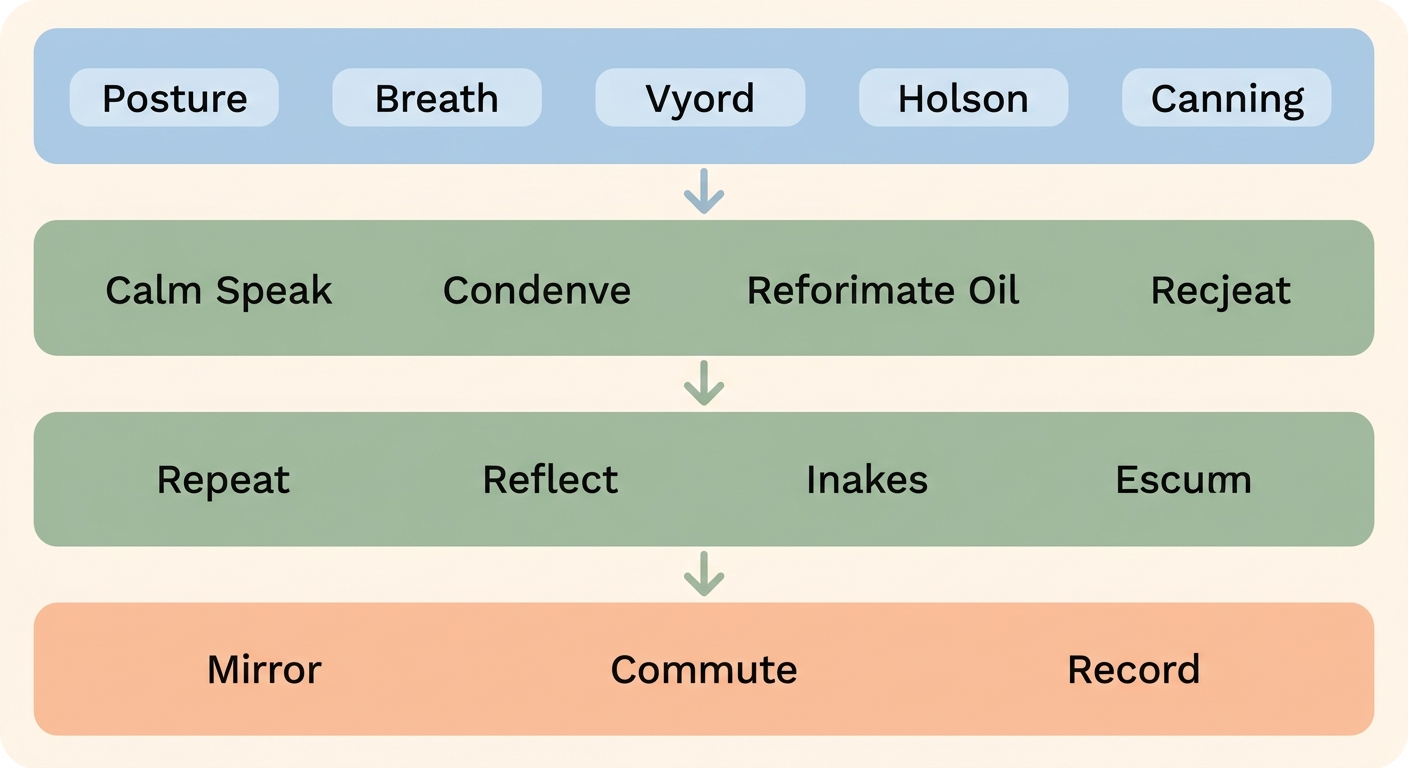
Four steps to speak your affirmations aloud with intention.
Following these steps transforms our spoken faith statements into a meaningful ritual that engages both heart and voice.
Why It Matters
Speaking aloud reinforces the truth of our biblical affirmations by engaging our auditory processing. Romans 10:9-10 teaches that confession with the mouth proclaims faith physically, aligning body and spirit with God’s promises. This practice transforms your morning prayer routine from internal reflection into outward declaration without claiming guaranteed spiritual outcomes.
Practical Tips
Try saying your affirmations in front of a mirror to build eye contact with yourself. Whisper them during your daily scripture prayer practice on the commute or while doing chores. Record yourself and listen back during the day. For more structured devotional support, explore our daily prayer devotional resources.
When you make this vocal practice a habit, you’ll be ready to carry these truths with you at all times.
Pair Affirmations with Prayer and Reflection
Pairing biblical affirmations with prayer transforms devotional time into a living conversation with God.
Instructions
Begin by speaking a biblical affirmation aloud, such as “I am deeply loved by God.” After declaring the truth, enter silent prayer, asking the Lord to seal that truth in your heart. Make this part of your morning prayer routine to ground your day in His word. Write the affirmation in a prayer journal before praying, and jot down any impressions or scriptures that arise during prayerful reflection.
Why It Matters
Prayer shifts biblical affirmations from self-talk to a genuine dialogue with God, deepening your dependence on Him and guarding against self-reliance. This daily scripture prayer practice opens your heart to receive the truth in a way that simple repetition cannot achieve.
Practical Tips
Our 21-day transformation program offers daily prompts and community support to structure this practice. Keep a prayer journal and surround yourself with biblical affirmations by setting one as your phone wallpaper for brief, prayerful reminders. Individual experiences vary; this tool supports, not guarantees, spiritual growth.
Track Your Progress and Notice Shifts
Instructions
As you practice your biblical affirmations, noticing small shifts can guide you. We suggest keeping a simple log, either a notebook or one of our free scripture reading guides 2026. Each day, note the date, your affirmation, mood, and any recurring thoughts or answered prayers. During your daily scripture prayer practice, jot a quick note after your reflection time. This gentle habit helps you observe patterns without pressure.
Why It Matters
Tracking helps us spot patterns; maybe certain biblical affirmations bring peace. When growth feels invisible, reviewing past entries reminds us change is unfolding. This gentle observation encourages persistence without pressure. Small victories become visible evidence of subtle change. It turns a quiet practice into a tangible record of hope.
Practical Tips
Set a weekly review time; use a simple 1–5 scale for peace or hope; and celebrate even tiny wins. During your morning prayer routine, note your rating and any surprises. Add a brief gratitude note each week. This keeps tracking light and encouraging.
Remember, while this practice supports your spiritual growth, always seek professional help for mental health concerns.
Share Your Affirmations with a Community
Instructions
Your daily scripture prayer practice gains depth when shared. Start by choosing one trusted person—a friend or small group member. Set a time to share your affirmation and ask them to pray weekly. As you gain confidence, join a small group in the Path to a Better Life community, where others on the 21-day transformation program exchange Bible-based declarations for mutual accountability. We encourage you to take this step.
Why It Matters
Sharing biblical affirmations creates accountability that transforms a personal exercise into a shared rhythm. This shared rhythm deepens commitment. When others speak the same truths over you, your commitment deepens, and you build a network of prayerful encouragement. This mutual support sustains you through the 21 days and beyond.
Practical Tips
Weave your morning prayer routine into community life. Start with one trusted friend. Use social media to share your biblical affirmations as encouragement, not comparison. Participate in the Path to a Better Life community. Community support is not a substitute for professional advice.
Sharing your affirmations opens the door to deeper growth and lasting change.
Not a substitute for professional medical or mental health advice; consult a qualified professional where appropriate.
Overcoming Common Challenges in Biblical Affirmation Practice
But even with the best intentions, you may face common hurdles. Common challenges in biblical affirmation practice often include inconsistency, forgetfulness, and discouragement when results don’t appear right away. These obstacles are normal, and with a few practical shifts, you can move through them.
To overcome inconsistency, try tying your affirmations to an existing daily habit, like your morning coffee. While your coffee brews, spend a few moments speaking God’s promises aloud. This transforms an ordinary moment into a meaningful part of your morning prayer routine. Building a consistent morning prayer habit can feel overwhelming, but starting small—just 5 to 10 minutes—makes it achievable. We love the practical advice from Valmarie Paper on developing a consistent morning prayer practice that fits your life.
When doubt or discouragement surfaces, pair each biblical affirmation with a specific Bible promise and write one sentence of gratitude in a journal. For example, if you declare ‘I am strong in the Lord,’ journal a brief thanks for a moment God gave you strength recently. This simple daily scripture prayer practice roots your mind in truth and shifts your focus from feelings of delay to God’s faithfulness.
For forgetfulness, set a daily phone reminder labeled ‘affirmation time’ or place a sticky note with a key verse on the bathroom mirror.
Remember, every small step counts. Persistence, not perfection, is the goal. At Path to a Better Life, we understand that building new spiritual rhythms takes time, and we’re here to walk with you every step of the way. With gentle grace and a supportive community, your affirmation practice can become a steady source of encouragement.
Building a Lifelong Habit of Scriptural Affirmations
Building a consistent practice of biblical affirmations begins with small, intentional steps. We at Path to a Better Life encourage you to anchor these moments into your morning prayer routine so that scripture becomes a natural part of your day.
Start with one verse each morning—speak it aloud for a minute or two and repeat the same verse all week. Pair this with an existing habit, like sipping your morning coffee, to anchor the practice naturally. Our prayer library lets you pick affirmations that address your current personal challenges, giving you a reliable source for your daily scripture prayer practice.
Keep a simple journal to note which verses resonate most—small steps still build lasting change. While scripture-based affirmations can nurture hope and perspective, they are not a substitute for professional medical or mental health advice, and individual experiences will vary. To take your first step, explore our 21-day transformation program. Discover a better life in just 21 days—Start Your Journey today.